Can You Wear a T-Shirt to Work?


Can you wear a T-shirt to work? In most offices now, the answer is yes, provided it’s a good one, it fits, and it suits the room you’re walking into that day. The lines of that rule may have blurred over time, but the judgement is ultimately still yours.
It’s a small comfort at eleven o’clock the night before a new job, standing at the wardrobe with a T-shirt in one hand and a shirt in the other. You’ve seen men wear a T-shirt to work and look sharper than anyone in the building. You’ve also seen it go the other way, and it probably had less to do with choosing a T-shirt than with which one. One looked intentional, the other looked like he’d run out of shirts.
The Short Answer, With the Numbers Behind It
Dress codes have relaxed faster than most wardrobes. In a 2025 survey of more than 1,300 workers, Monster found that 43 per cent had no dress code at all. Among those who did, most described it as business casual, and only 6 per cent worked in a business formal environment.
The UK has moved too.Analysis of Indeed job postings reported by Euronewsfound that by July 2025, 3.3 per cent of UK job listings mentioned casual dress, more than ten times the 0.2 per cent recorded in the first half of 2019. Employers now list it as a selling point, alongside the pension and the free breakfast.
Whether a T-shirt is allowed is more or less answered. Whether yours looks right on the day is down to execution.
Did You Know?
Casual dress now appears in UK job adverts as a stated perk. A generation ago, the same listing would simply have assumed the suit.
Why the Industry List Is the Wrong Test
Most advice on this question arrives as a table: technology yes, law no, creative agencies yes, banking certainly not. It’s a reasonable place to start and a poor place to stop.
Sector is a weak predictor
Offices don’t dress by sector. They dress by room, and by rank. A law firm’s IT team may never have to don a tie, while a start-up’s founders reach for jackets the moment an investor walks in.
Rank also cuts in a direction people don’t often admit. The most senior person in the building is typically the most casually dressed, because everyone already knows who he is. The founder in a grey T-shirt is spending status he earned years ago. A new hire has no such account to draw on, and until the room knows who you are, your clothes do some of the introducing.
Use the one-level-up test instead
So dress for the room, then go one notch above it. Look at tomorrow’s diary, find its most formal moment, and picture what the room will be wearing for it. Then add a level. If the room is in T-shirts, make yours a good one with tailored trousers. If it’s in jackets, bring one. If it’s in shirts, wear a shirt. The aim is to be at ease in the room, and noticed for the right reasons.
The test moves with your week, which a table can’t do. A day of internal work with your own team is a T-shirt day without a second thought. A first meeting with a new client’s finance director later that week calls for the same T-shirt under a jacket, or a shirt.
Pro Tip:
Here’s a useful tip from Michael Shuttleworth, Founder and Creative Director of W.Rubens: If you don’t know who’ll be in the room, take a jacket. It costs you nothing if everyone turns up in T-shirts, and it can come off within five minutes of sitting down. Arriving underdressed is much harder to put right.

What Separates a Work T-Shirt From a Weekend One
The same T-shirt can look fine at a barbecue, but slightly lost in a meeting. Price aside, three things make the difference:
Weight and opacity
A thin jersey that looks respectable at home can turn faintly see-through under strong overhead lights, and nothing says underdressed quite like it. For a T-shirt that will be seen on its own, a mid-weight jersey of roughly 170 to 200gsm is a sensible range, though the density of the knit counts as much as the number. Hold a single layer up to daylight before you trust it at work.
Fit, starting at the shoulder
The shoulder seam should meet the edge of your shoulder, neither hanging off it nor stopping short, and the body should follow you without gripping. The same principles apply across the category, as we cover in our guide toshirts versus T-shirts. Work adds one test the mirror won’t give you: you’ll be sitting down. A T-shirt that looks right standing can ride up and bunch at the stomach through a two-hour meeting, so check it in a chair as well.
Finish, the detail that makes the difference
Take away the collar, the buttons and the cuffs, and a T-shirt has very little left to show that anyone took care over it: the neckband, the seams and the hem. A neckband that has started to ripple is the quickest way for a good outfit to look tired.
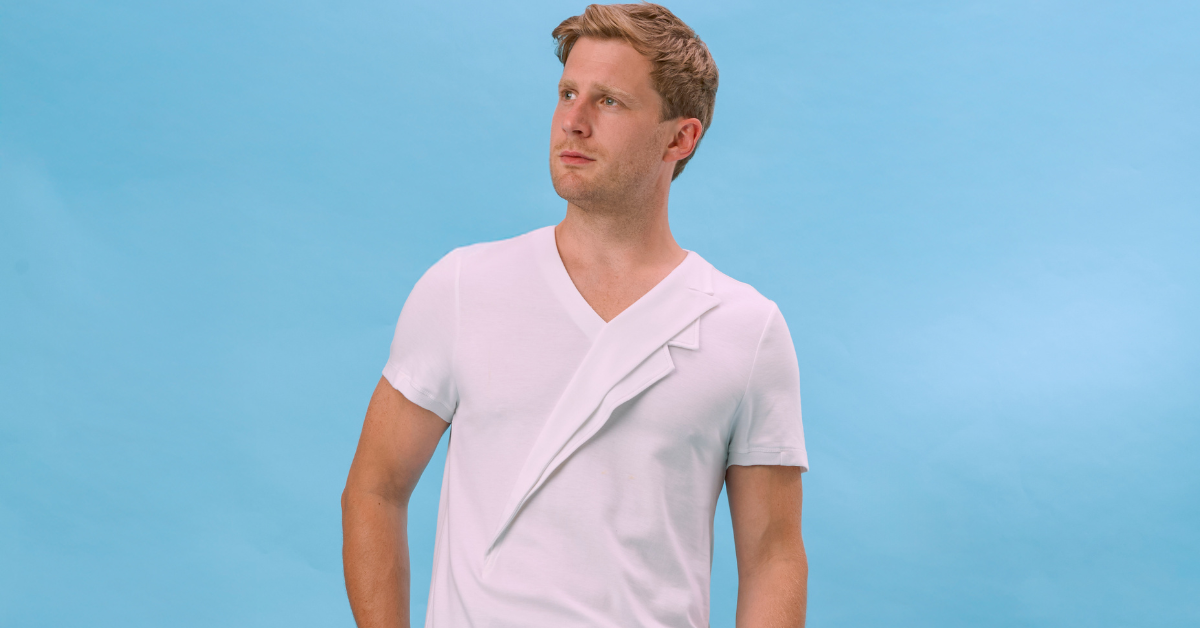
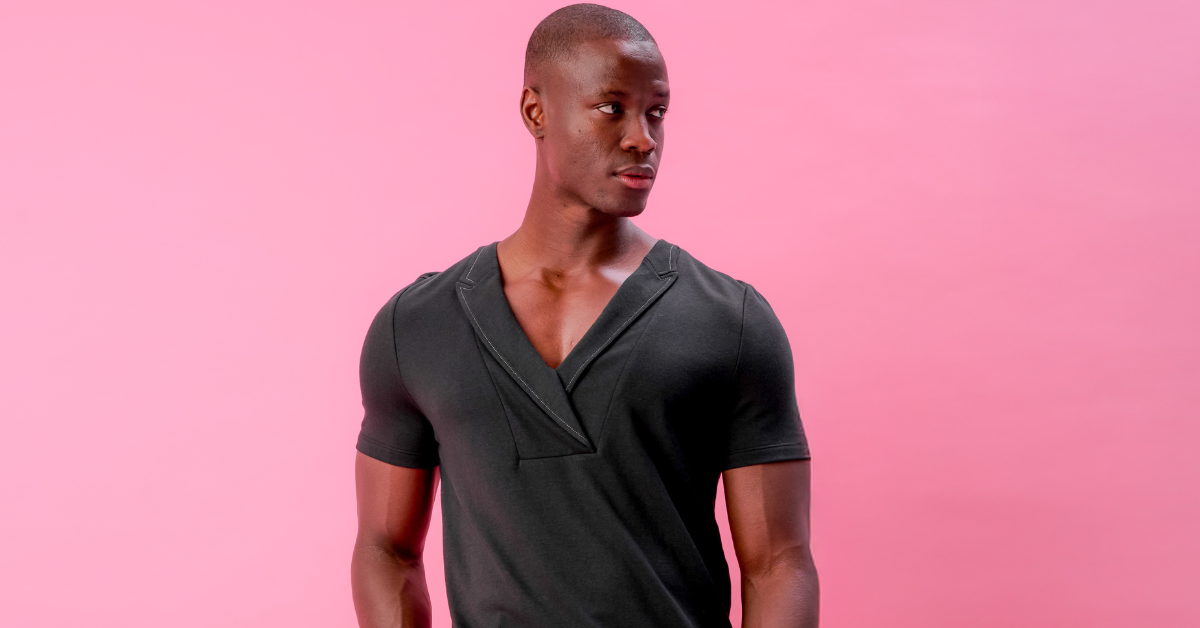
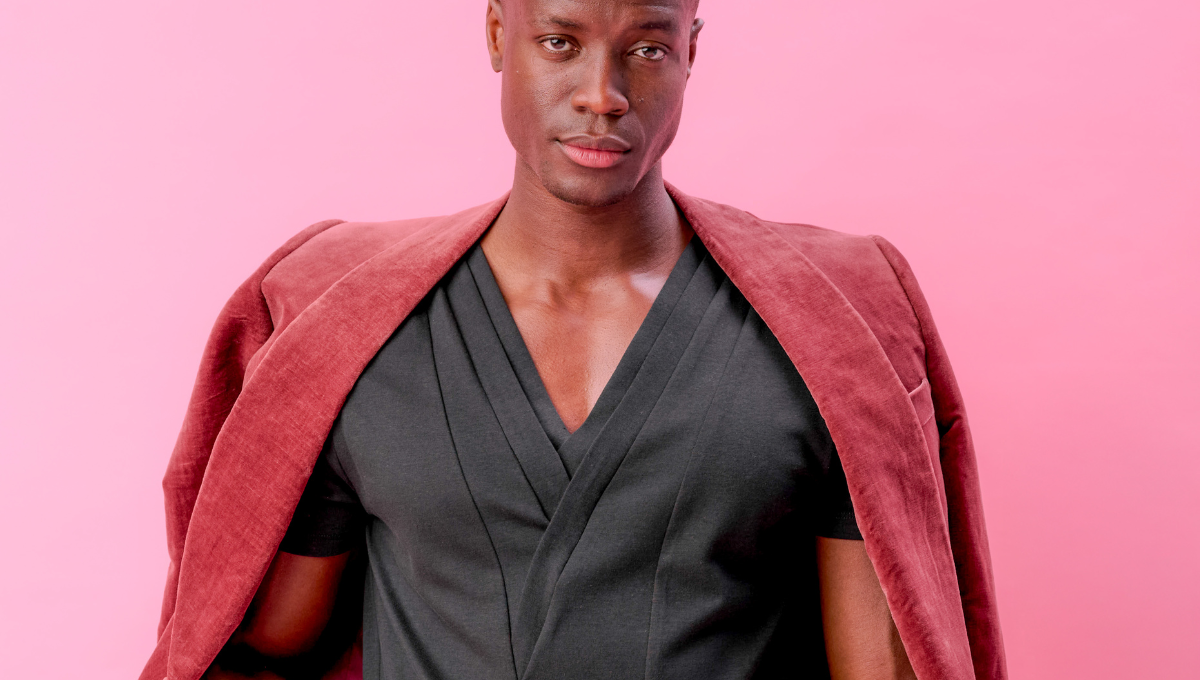
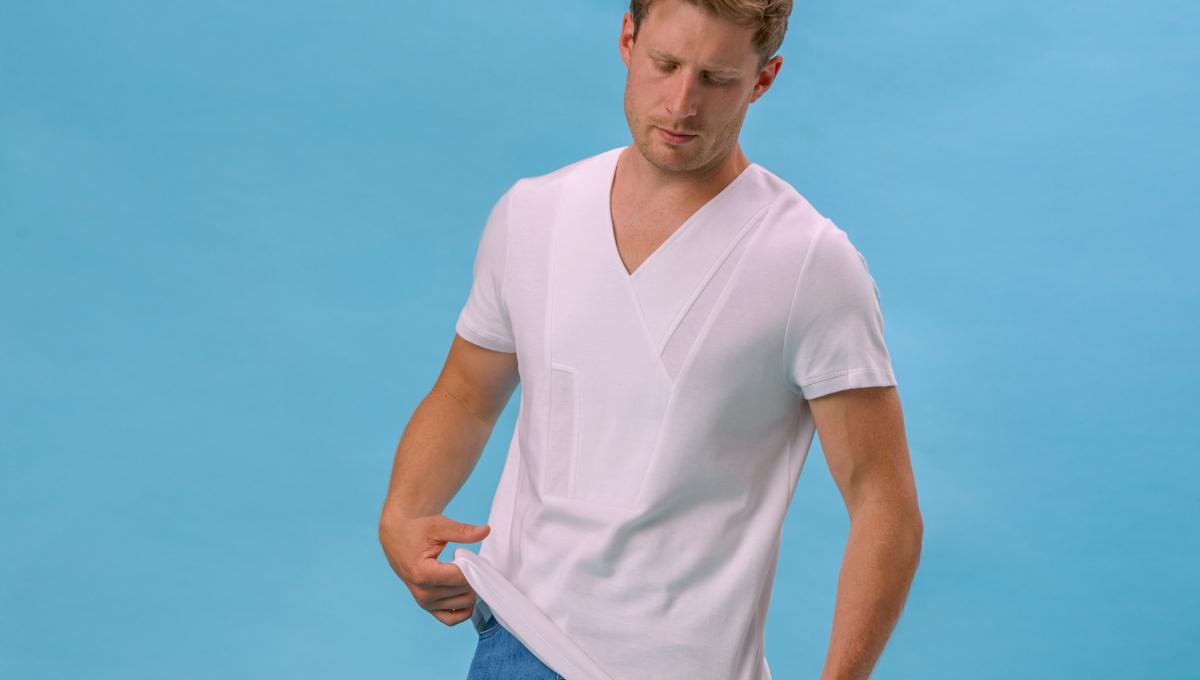
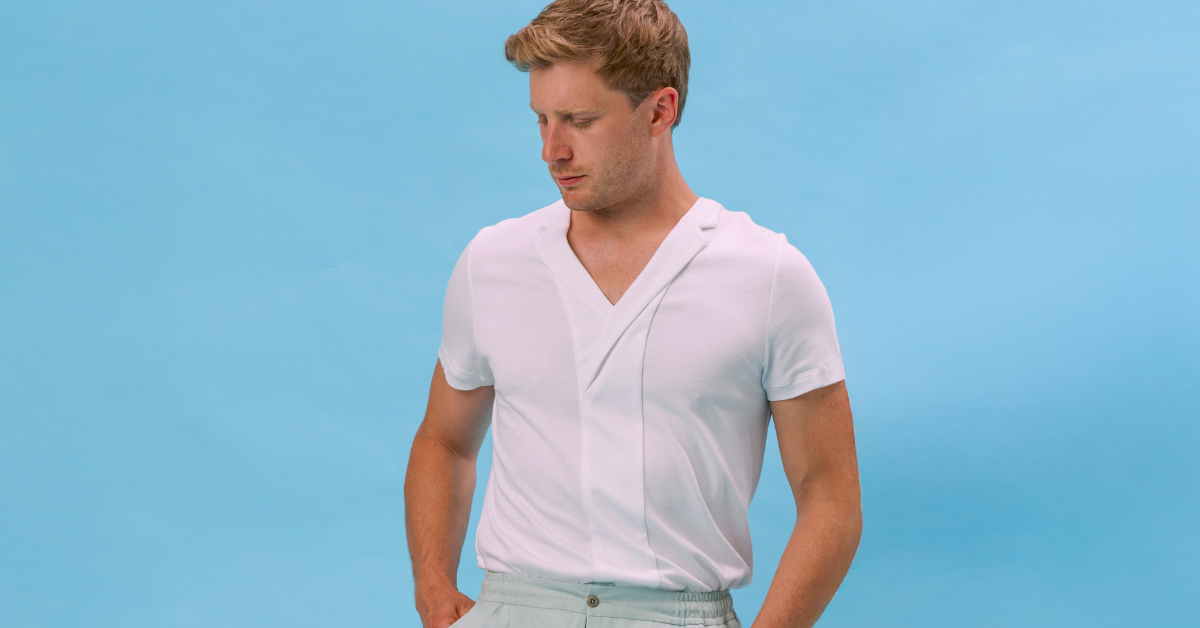
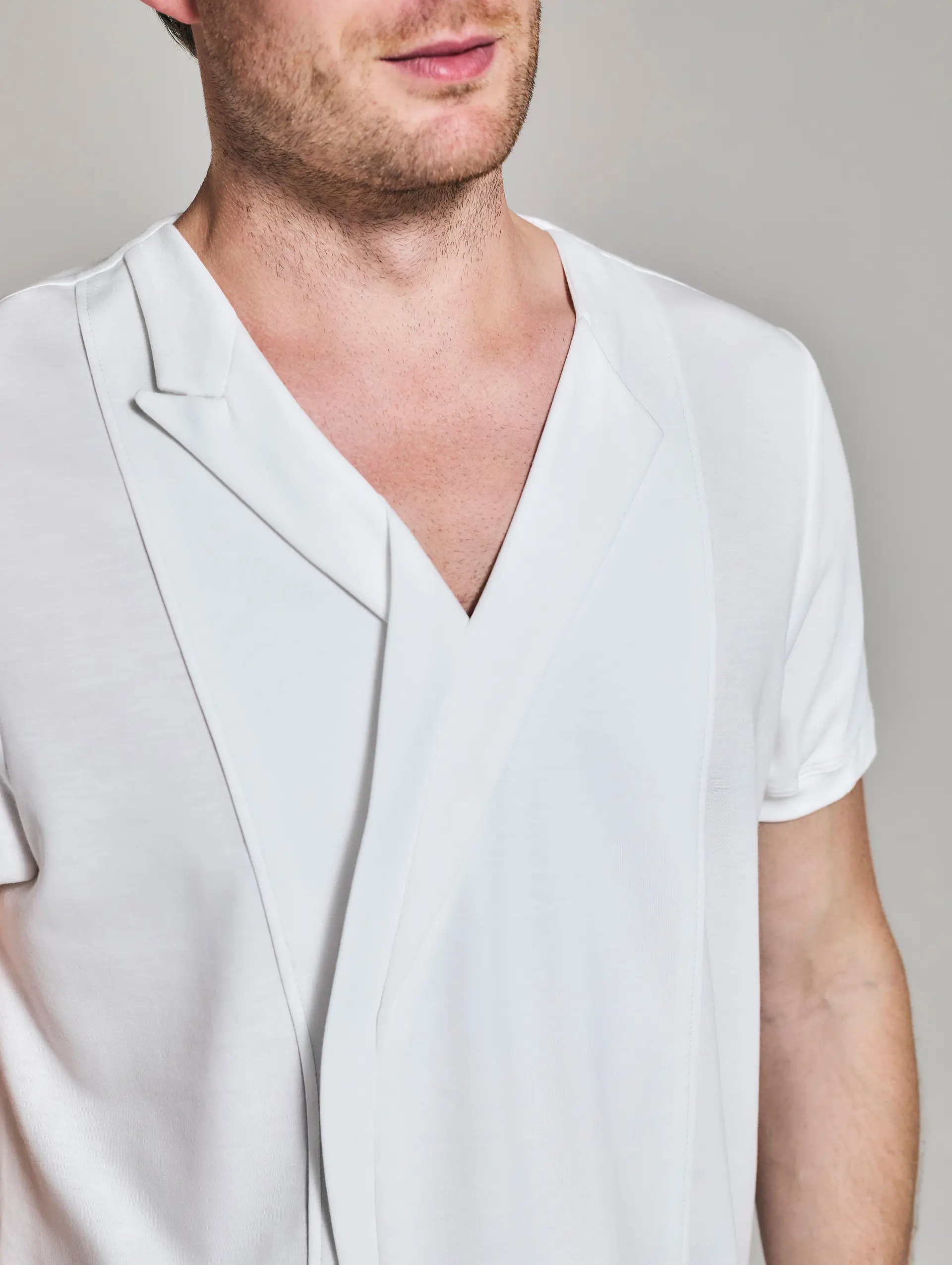
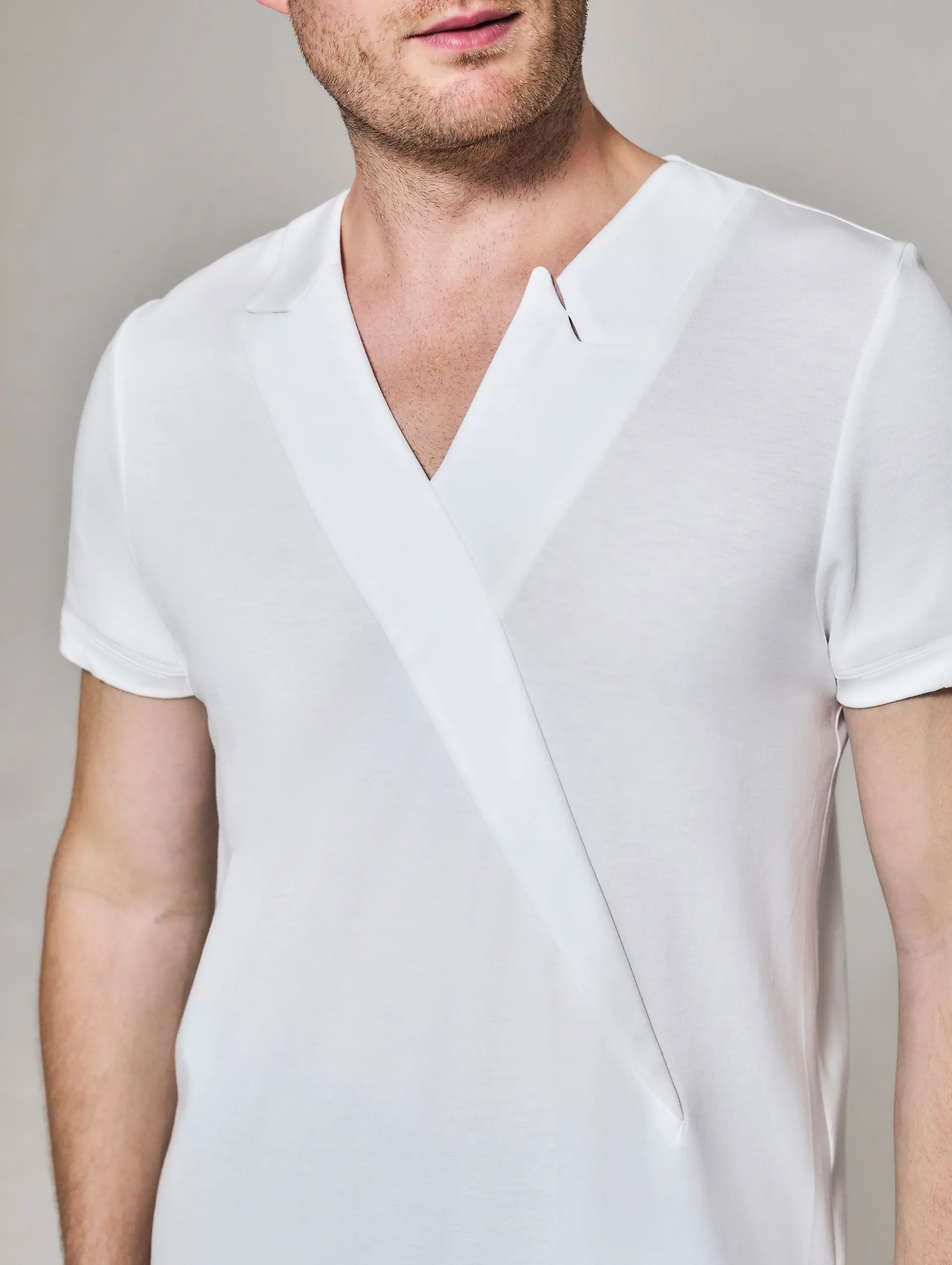
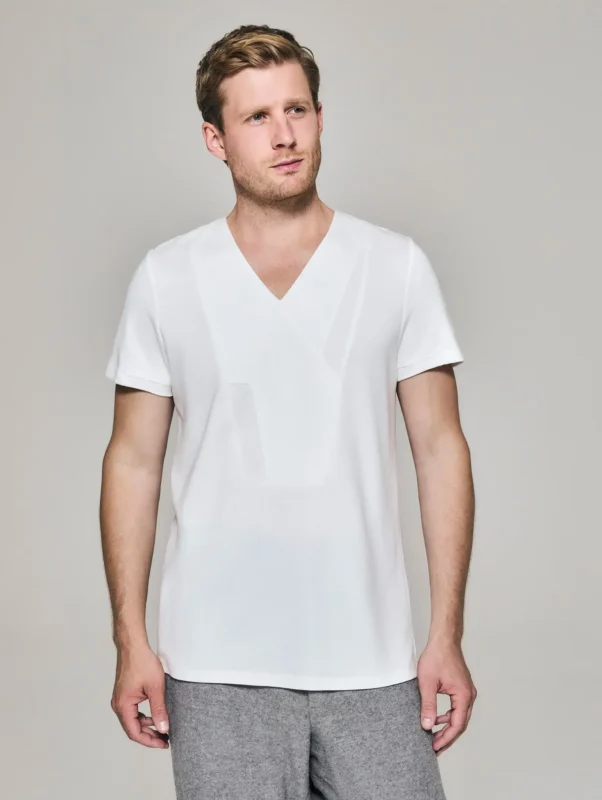
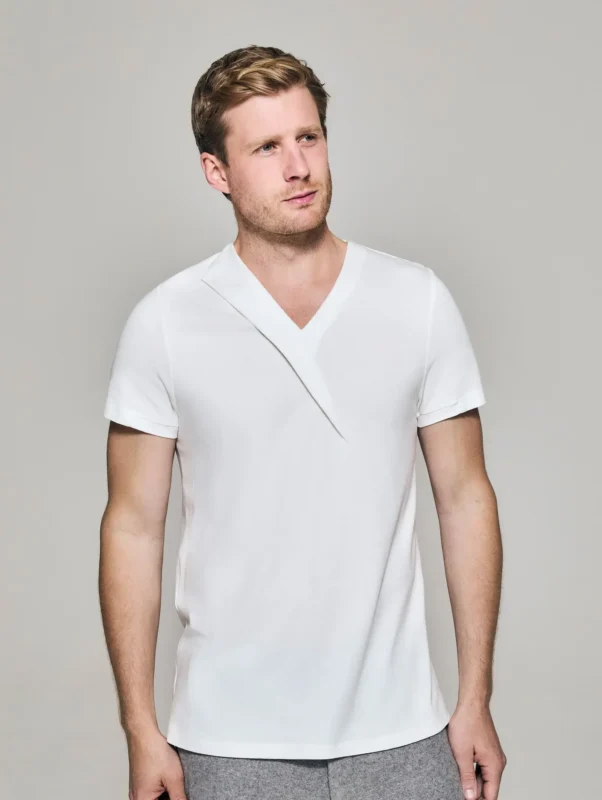
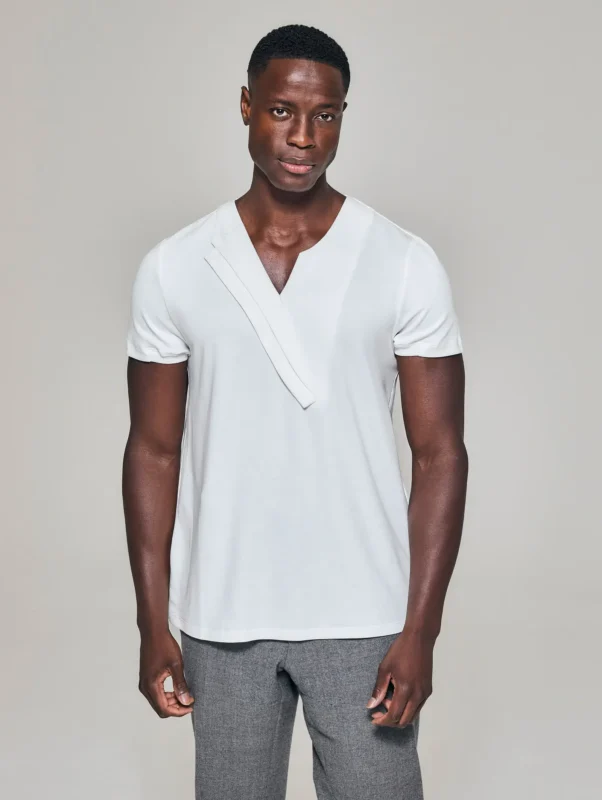
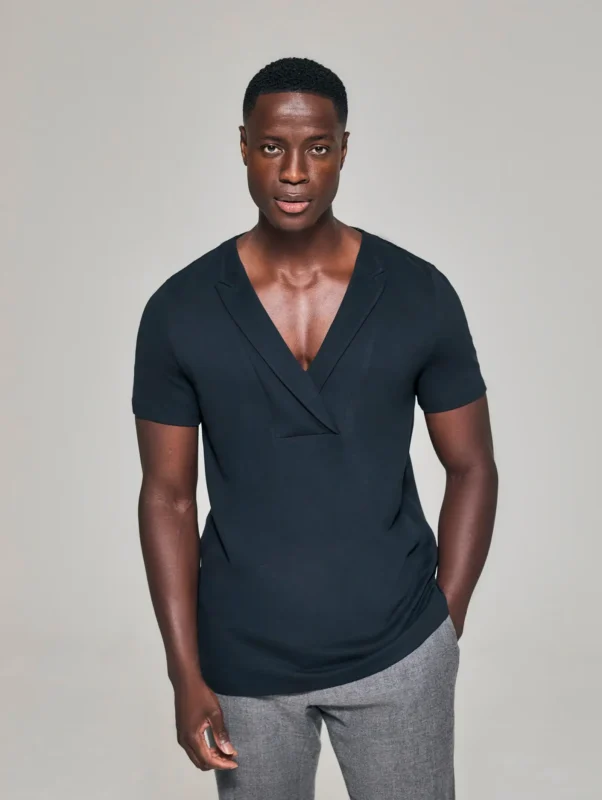
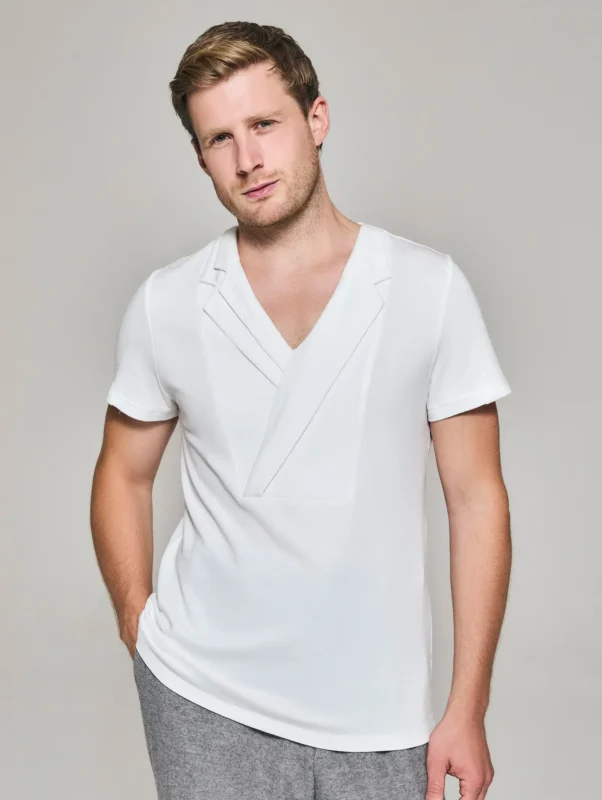
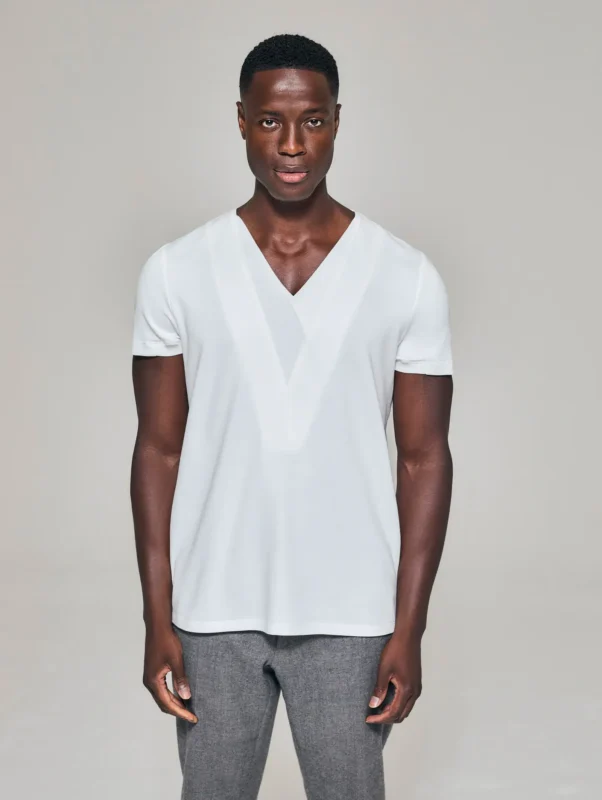
Design can go further than finish, and this is where a T-shirt moves up the formality scale. Part of what makes a shirt look formal is its architecture: a collar framing the face and a placket drawing a straight line down the chest. Under a jacket, a sharp V-neck does some of the collar’s work, and a bib front gives the chest a line of its own. W.Rubens, a London menswear design house, approaches the T-shirt through the eye of tailoring. Its signature back notch lapel, rooted in traditional British tailoring, sits on the back of the T-shirt: out of sight under a jacket, on show when the jacket comes off at lunch. The’ lapel T-shirt takes the idea furthest, borrowing the vocabulary of a jacket so the T-shirt keeps some of that formality when worn on its own.
At conversation distance, detail like this is what separates a considered T-shirt from a basic one. Our guide toquiet luxury as a wardrobe strategy looks at why quality at close range matters; W.Rubens adds a stronger point of view, pairing British craftsmanship with distinctive design. Colour changes the picture again. White is the most exposing colour to wear to work, which is why we looked atwhat makes white work on its own.
How to Style a T-Shirt for Work
Choose the layer for the room first and the weather second.
| Setting | Pairing | Why it works |
| Internal day, own team | T-shirt, tailored chinos, clean leather shoes | Comfortable without looking off-duty |
| Meeting with unfamiliar colleagues | Add an unstructured blazer | Structure at the shoulder does most of the formality |
| Client-facing, modern client | T-shirt, wool trousers, soft jacket | Composed without looking corporate |
| Client-facing, conservative client | Shirt, not T-shirt | The one case where the category is wrong |
| Evening event after work | T-shirt, dark trousers, overshirt | The layer comes off and the T-shirt still looks right |
Keep the colours to white, black, navy and grey to begin with; white and black, the two W.Rubens signature T-shirts, are the easiest place to start. Once you know the room, you can widen the range.

The Five Things That Get Notice
Before they notice you’re wearing a T-shirt, they notice these first:
- Graphics, slogans and visible logos. Wearing a slogan on a T-shirt to work can start a conversation you didn’t mean to have. At work, individuality is better expressed through cut and detail than printed across the chest.
- Thin or sheer fabric. Under office lights, it’s the most common failure and the hardest to fix once you’ve arrived.
- A T-shirt worn alone in a layered room. The T-shirt may look fine, but you’ve misjudged the room and the dress code.
- A stretched or wavy neckband. It’s the first part to go, and the first part the person opposite you sees.
- Trainers doing too much work. Clean leather trainers can pass in a relaxed office. Tired running shoes undo the effort above the ankle.

Conclusion
You can wear a T-shirt to work in most offices now. Whether yours looks right on the day comes down to the room, the fabric, the fit, and whether the details show that someone crafted it with care. If fabric is where you’d like to start, our comparison of Supima and standard cotton explains how cotton grades differ.
Tonight, before you choose, look at tomorrow’s diary. Find its most formal moment and dress one notch above that room. If it turns out to be a T-shirt day, wear a good one, and wear it like you meant to.
Explore theW.Rubens T-shirt collection, cut in London for exactly those days.
Frequently Asked Questions
Q. Can you wear a T-shirt to work in a corporate office?
In most corporate offices, yes, provided it is a well-made T-shirt worn with tailored trousers and, where the room calls for it, a jacket. The main exceptions are rooms where a collared shirt is still the norm, which is more common in traditional law, private banking and conservative finance, though it is the room, not the sector, that decides.
Q. What kind of T-shirt is appropriate for work?
A plain, opaque T-shirt in a neutral colour and a mid-weight jersey of roughly 170 to 200gsm, with the shoulder seam at the edge of the shoulder and clean finishing at the neckband and hem. Graphics, slogans and large logos are best left for the weekend.
Q. Can I wear a T-shirt to a client meeting?
It depends on the client’s room more than your own office. Where the client dresses casually, a good T-shirt under a soft jacket usually fits in. Where they dress conservatively, wear a shirt.
Q. How many work-appropriate T-shirts should I own?
A rotation of three to five work T-shirts in neutral colours covers most weeks without over-wearing any single one. Buy them with the care you would give a shirt, since they are doing the same job.
Q. Is a T-shirt under a blazer professional?
Yes, and it is the most reliable way to wear one at work. The jacket supplies the structure a T-shirt lacks, particularly an unstructured or soft-shouldered one, so the combination looks deliberate rather than underdressed.