Why Do Men Look So Good in Plain White T-Shirts?

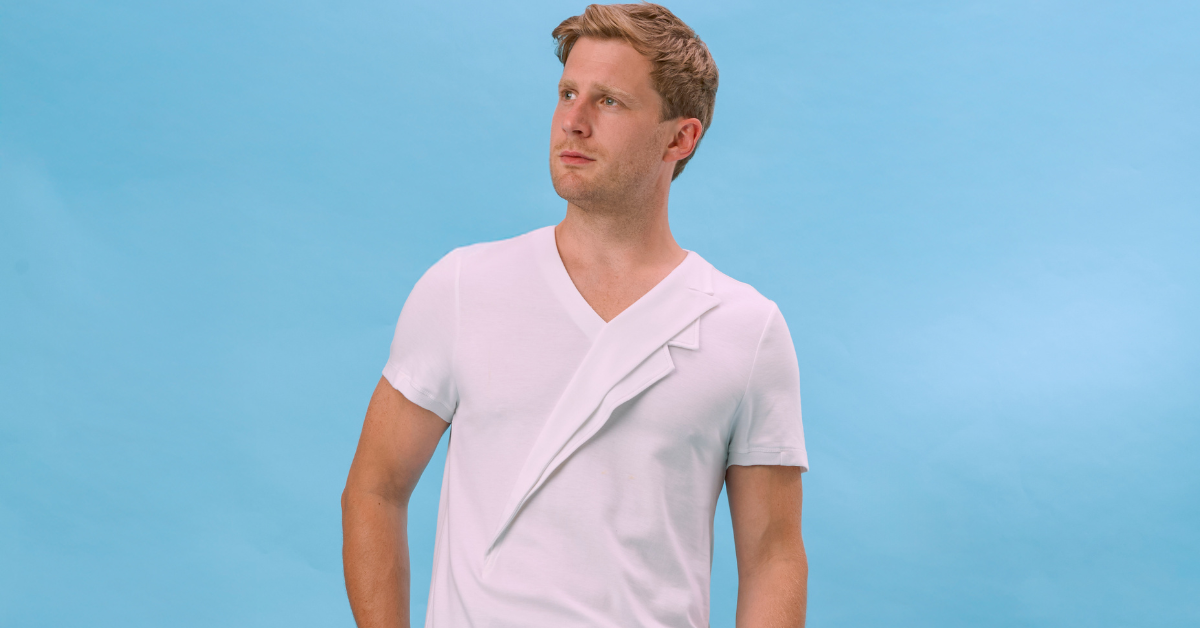
A man in a white T-shirt has nowhere to hide. That’s why the look works. White strips things back to fit, posture and fabric: where the shoulder falls, how the jersey drapes, whether the neckline still looks crisp. Get those three right and nothing else is needed. Get one wrong and white won’t exactly be discreet about it.
Three Things a White T-Shirt Does to the Way You Are Seen
It reflects light upwards
Put a white T-shirt and a navy one under the same face in daylight and they behave differently. The lighter cloth reflects more light upwards, including beneath the jaw and around the lower face, much as a photographer’s reflector does. It isn’t a beauty filter, but a fresh white T-shirt can make the face above it appear brighter.
It removes competing information
Pattern and colour give the eye somewhere else to go. White can’t. The shoulder, sleeve and neckband are exposed, so a misplaced seam or slack neckline has little cover. With so little on show, every detail is under scrutiny.
It carries a borrowed history
The T-shirt spent its early life hidden. Cinema helped move it into public view, with Marlon Brando in A Streetcar Named Desire in 1951 and James Dean in Rebel Without a Cause in 1955 giving the white T-shirt a rebellious charge that still feels familiar.
The Victoria and Albert Museum traces its route from naval undershirt to outerwear. Fashion historian Valerie Steele called it “the most significant and pervasive example of underwear as outerwear”. That tension still gives the white T-shirt some of its character.
Did You Know? After the Second World War, the T-shirt was still widely worn beneath other clothes. Its life as everyday outerwear came later.
The Catch Nobody Mentions: White Amplifies Everything

It shows every construction flaw
A waving neckband, twisting side seam or rising hem is less obvious in a dark T-shirt. White makes those faults easier to read. Nobody across the table is likely to murmur, “That side seam appears off grain.” They simply see a T-shirt that looks tired.
It goes translucent under the wrong light
Then there’s the white T-shirt that behaves impeccably in the bedroom mirror and becomes a different garment altogether at 10.15am under office lighting. Lightweight jersey can look opaque in soft light, then show far more beneath bright overheads or direct sun.
Pro Tip: Hold a single layer against a window in daylight. If the outline of your hand is immediately obvious, expect the cloth to show more under strong light. Four seconds can save a long day of wondering whether everyone else has noticed.
White uniquely reflects light, creating a subtle yet flattering glow that enhances skin tone, highlights facial features, and projects vibrancy. Photographers frequently leverage this principle, using white reflectors to illuminate subjects beautifully. Wearing a white T-shirt similarly acts as a personal reflector, enhancing attractiveness and approachability through natural illumination.
The Three Variables That Decide Whether It Works
Fit, weight and shade solve most of the problems white exposes.
Fit: shoulder seam first
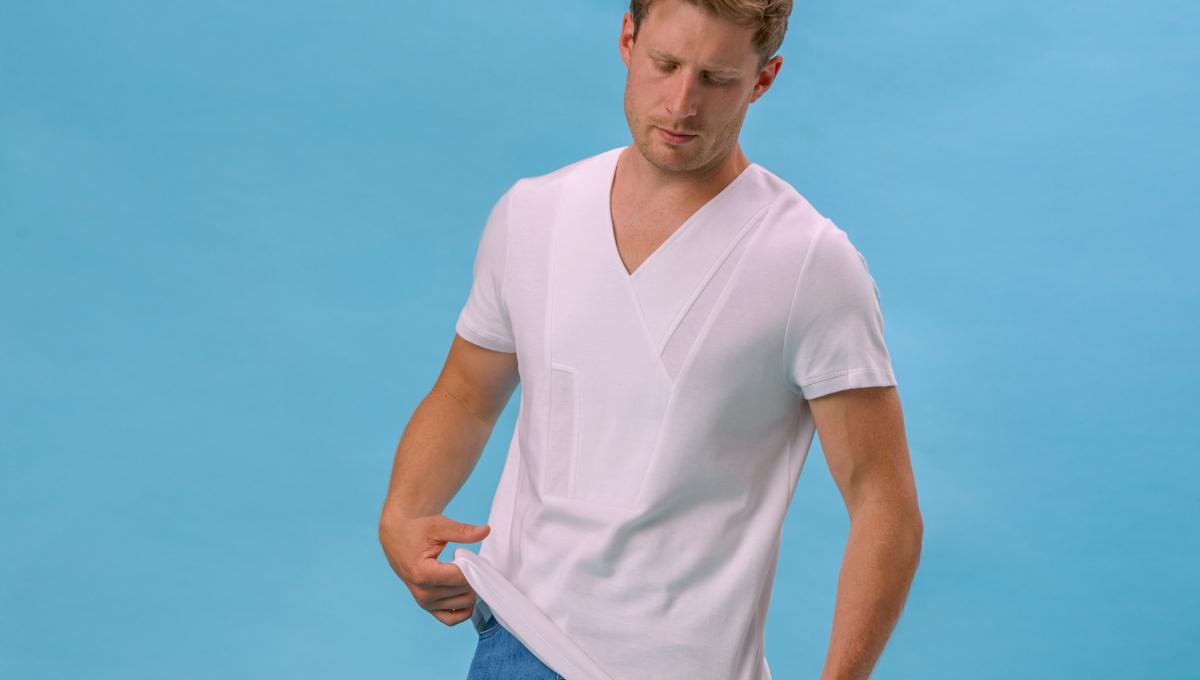
Start at the shoulder. On a fitted T-shirt, the seam should meet the outer edge cleanly instead of stopping short or dropping down the arm. Sleeves around mid-bicep usually keep the proportions neat, while the body should follow the torso without gripping it.
Length and taper can sometimes be adjusted. A misplaced shoulder is much harder to argue with, so if it’s wrong, stop negotiating with the mirror. It’s also why W.Rubens, a London menswear design house, cuts its T-shirts from a proprietary slim-fit block, tailored and fitted through the body.
Fabric weight and opacity
GSM, or grams per square metre, tells you the fabric weight. It’s useful, but not a quality score; yarn, knit structure and finishing still affect how the cloth hangs and reacts to light.
| Weight | Typical use | Opacity |
| 120 to under 170gsm | Warm weather, layering | More likely to show through in strong light |
| Around 170 to 200gsm | Everyday standalone wear | Usually more opaque, with enough body to keep its shape |
| 220gsm and above | Structured, heavyweight look | Typically opaque, with less drape |
For a white T-shirt worn alone, look for a mid-weight jersey of around 170 to 200gsm. Weight alone doesn’t decide opacity, though: a dense knit can be more opaque than a looser, heavier one. The window, as ever, has the final word.
The shade of white
White isn’t one colour. Some whites have a cool, almost blue cast; others are warmer. Optical brighteners can create a crisp white, although that brightness can lessen through repeated washing.
Put two white T-shirts beside each other and the difference is obvious. The brightest white in the shop isn’t always the one you reach for most.
How to Wear It So It Reads Deliberate
A good white T-shirt needs little styling, but it won’t look its best in careless company
Layer it rather than isolate it
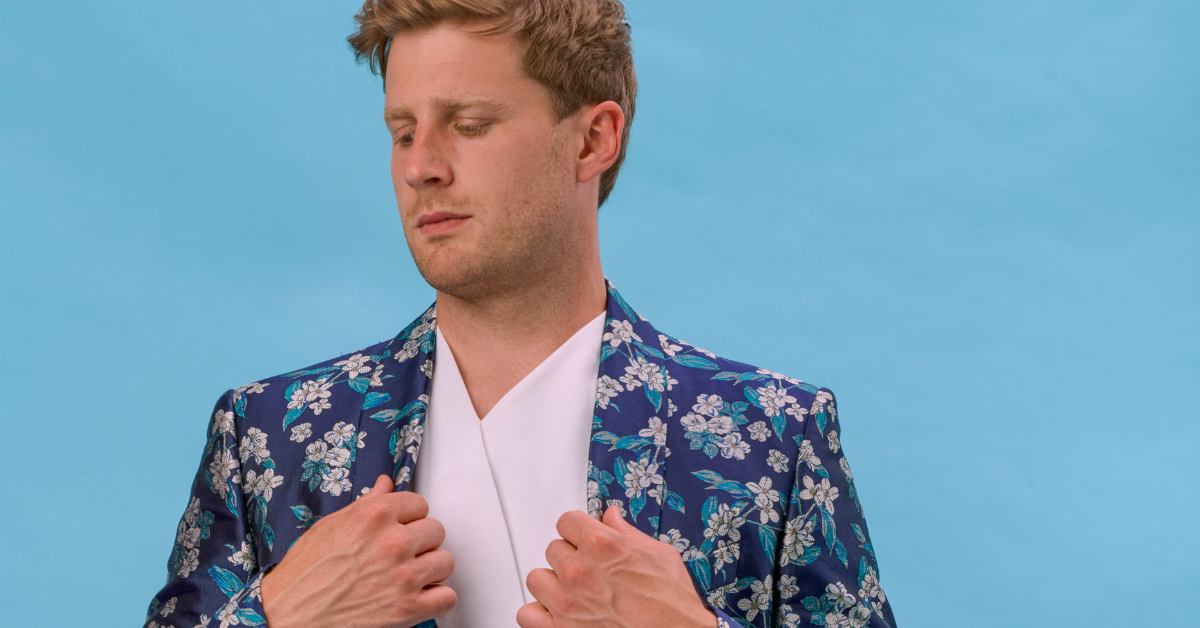
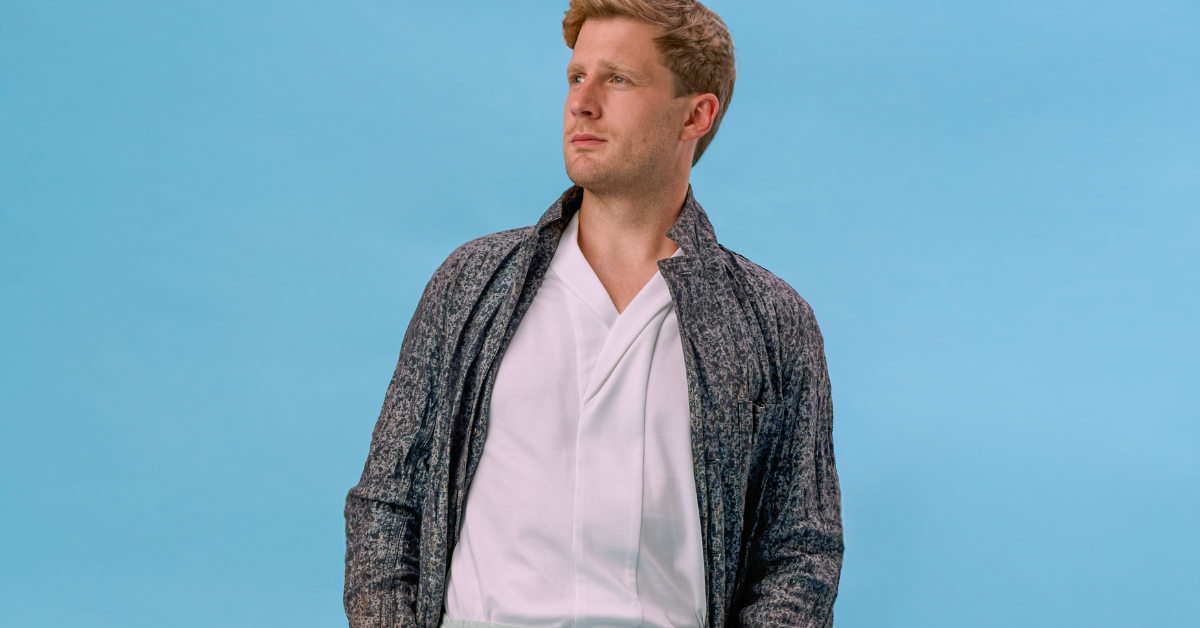
Under an unstructured jacket, overshirt or fine-gauge knit, white gives the outfit a clean centre while the outer layer adds shape and texture. It works where a shirt feels too formal but a tired T-shirt would fall short of the room.
Our guide to wearing a T-shirt to work looks more closely at that territory. Worn alone, a white T-shirt leaves every detail on display, which is precisely why the details need to be good.
Let the detailing do the talking
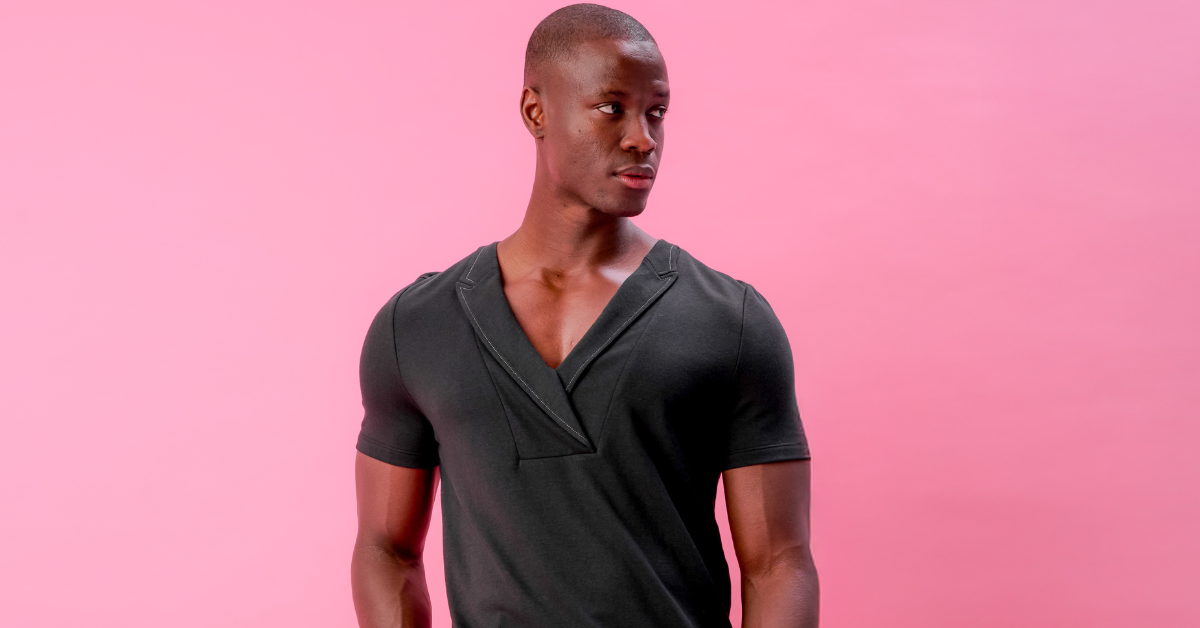
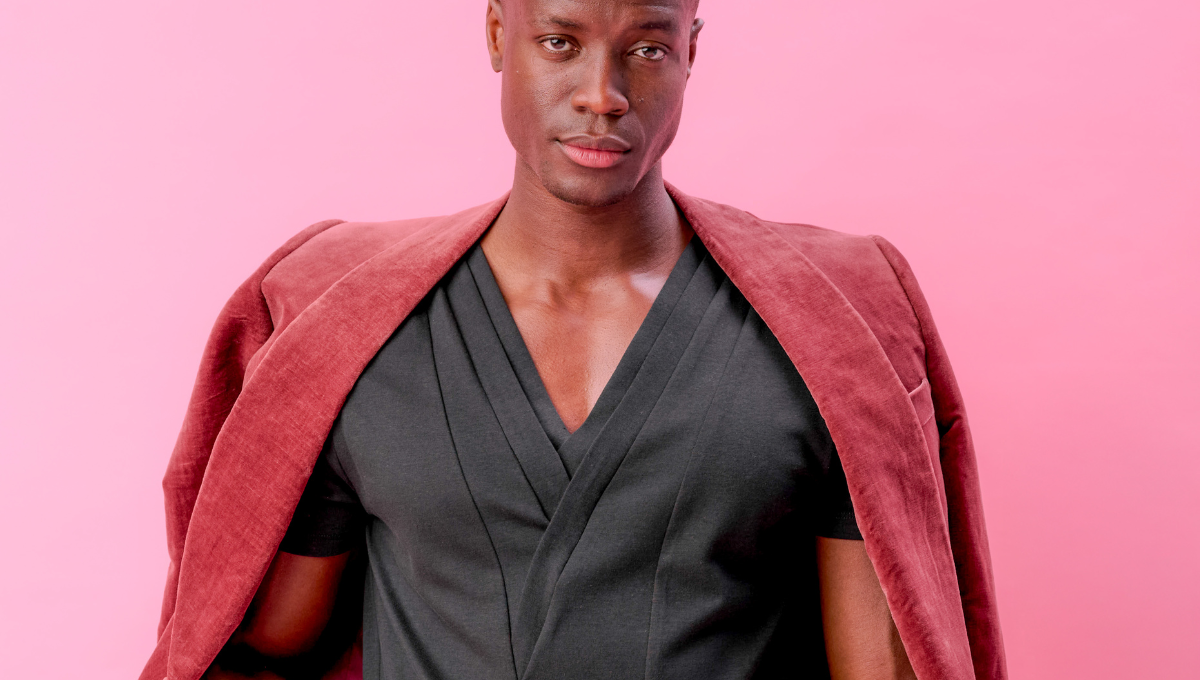
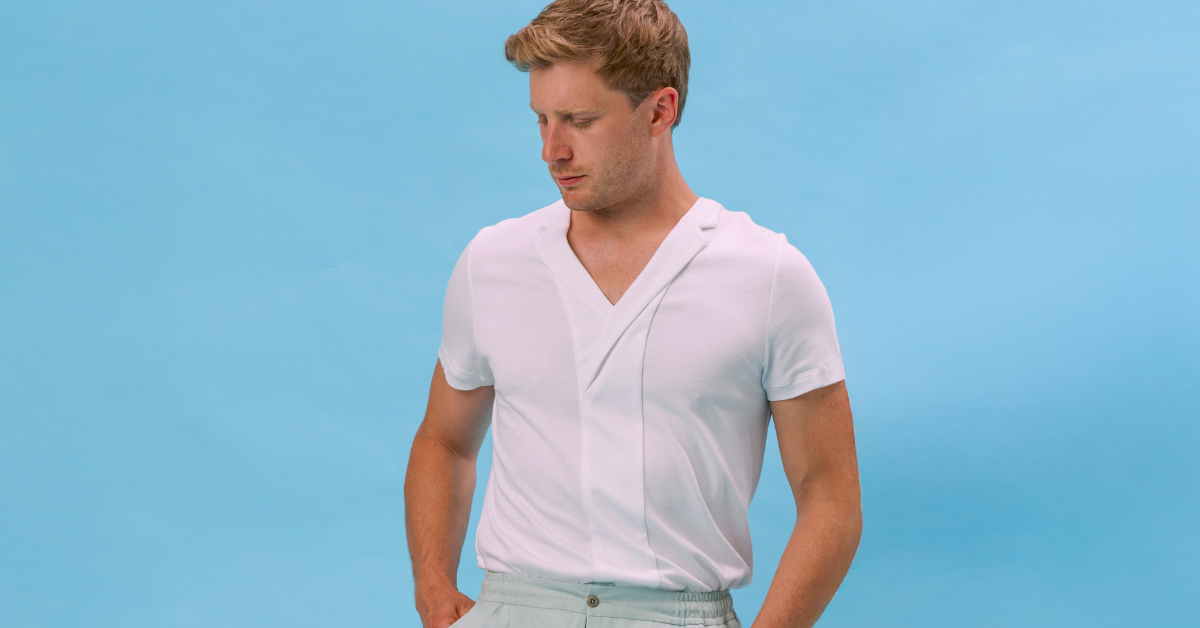
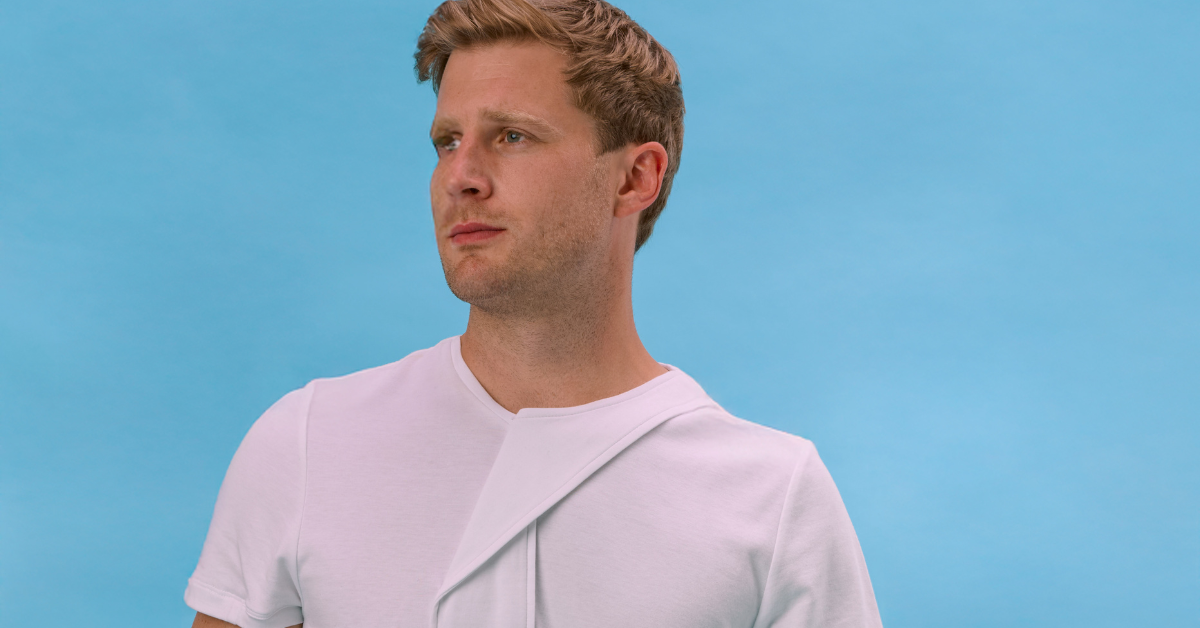
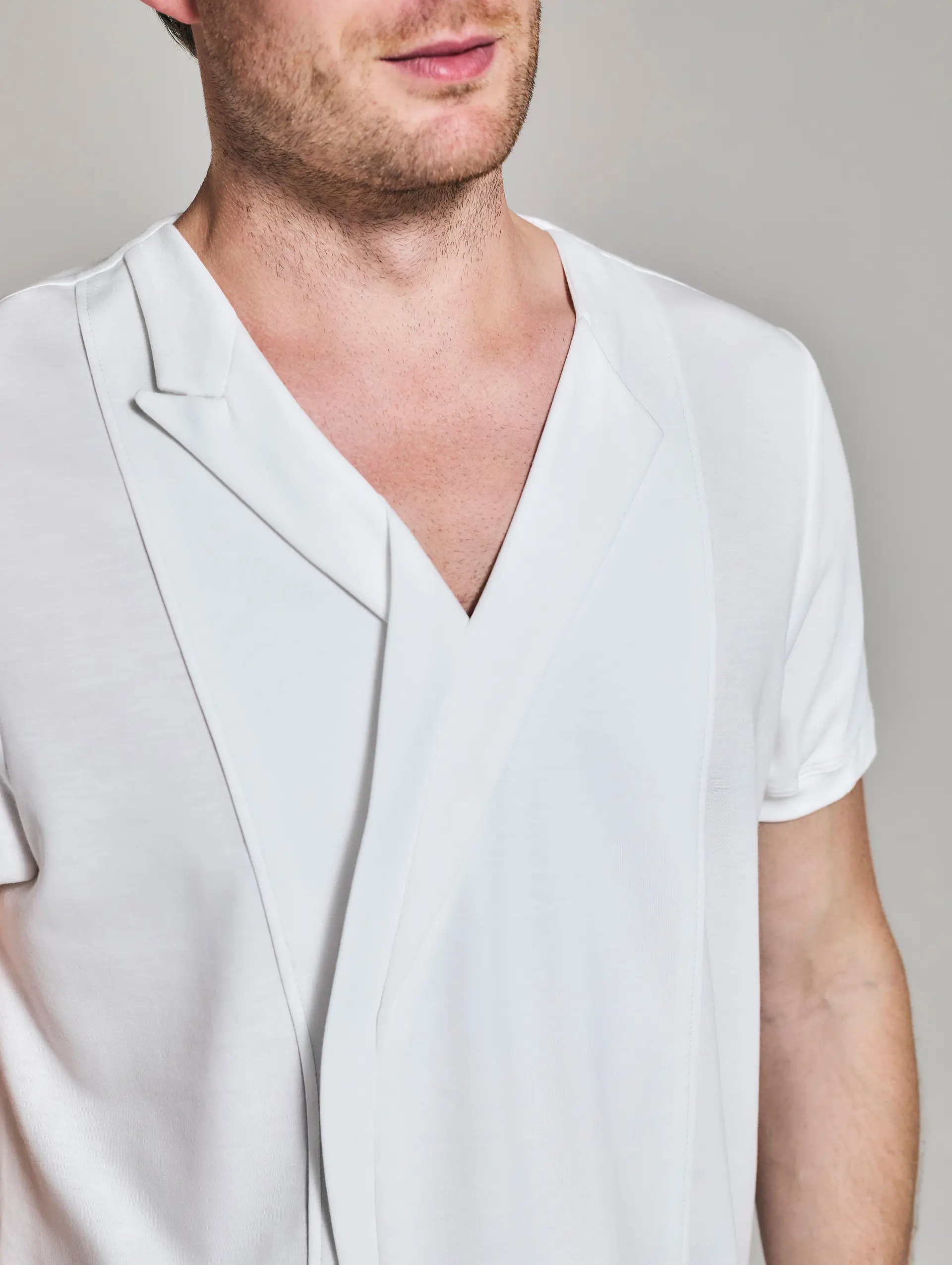
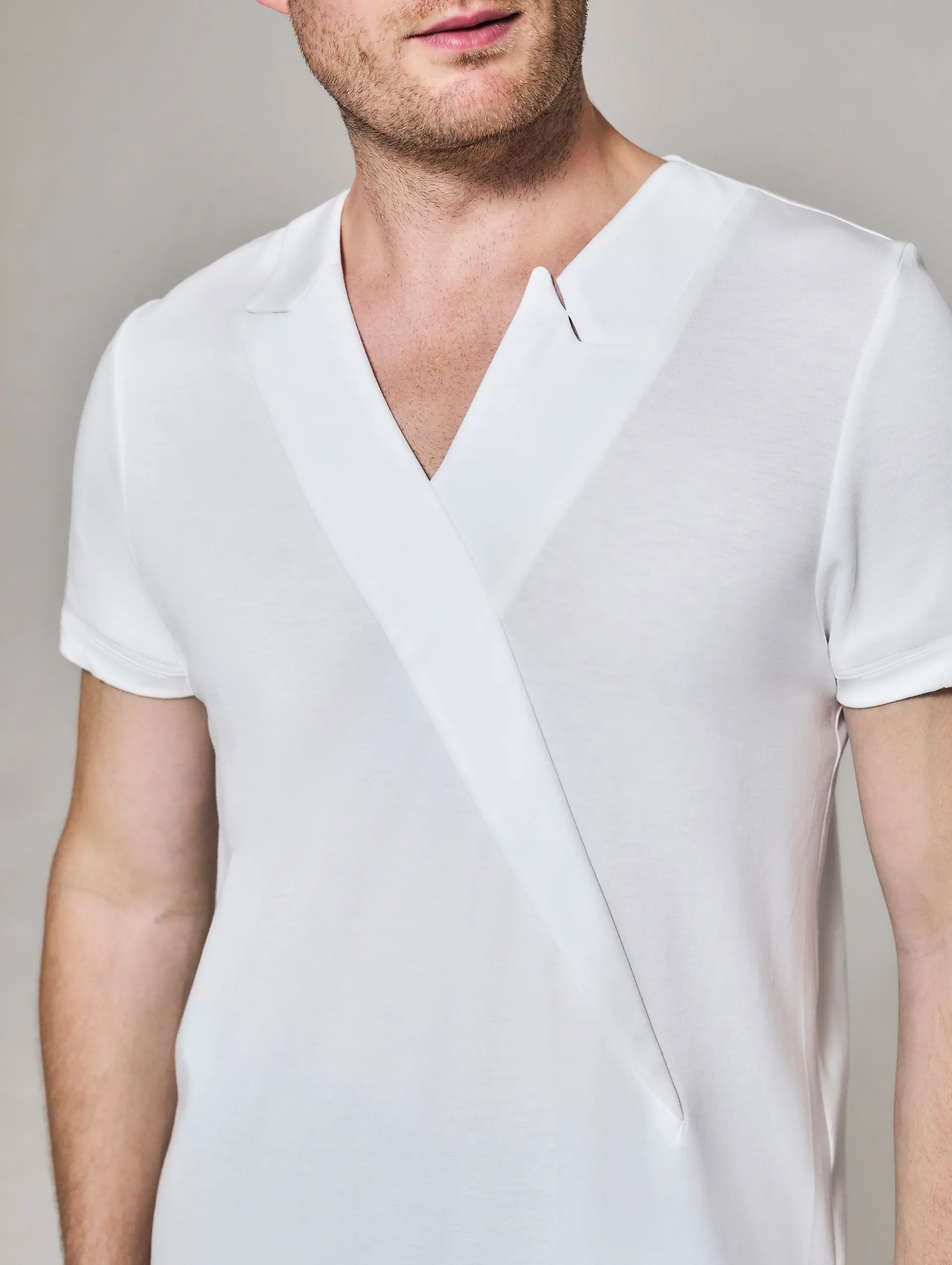
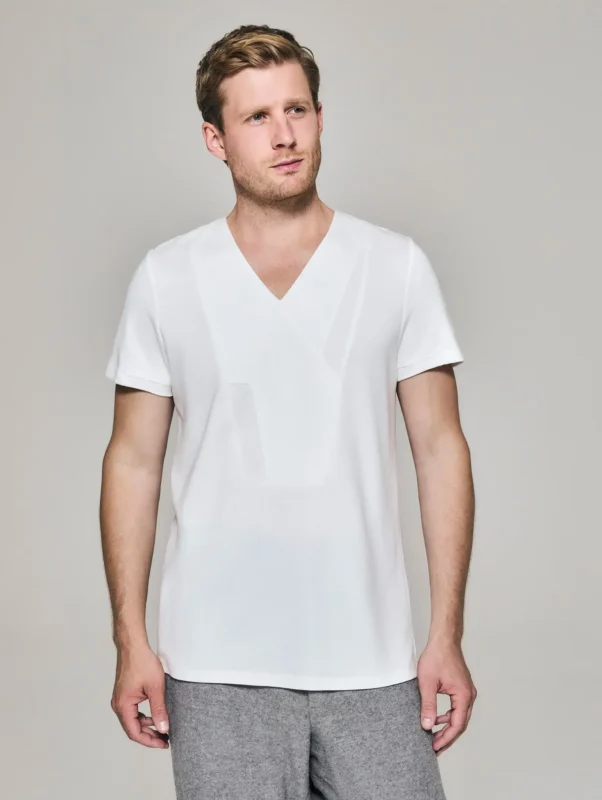
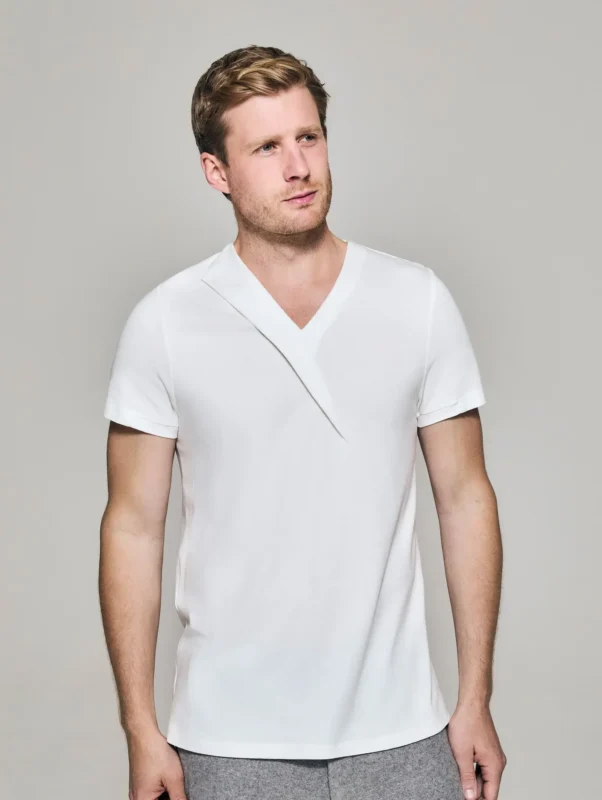
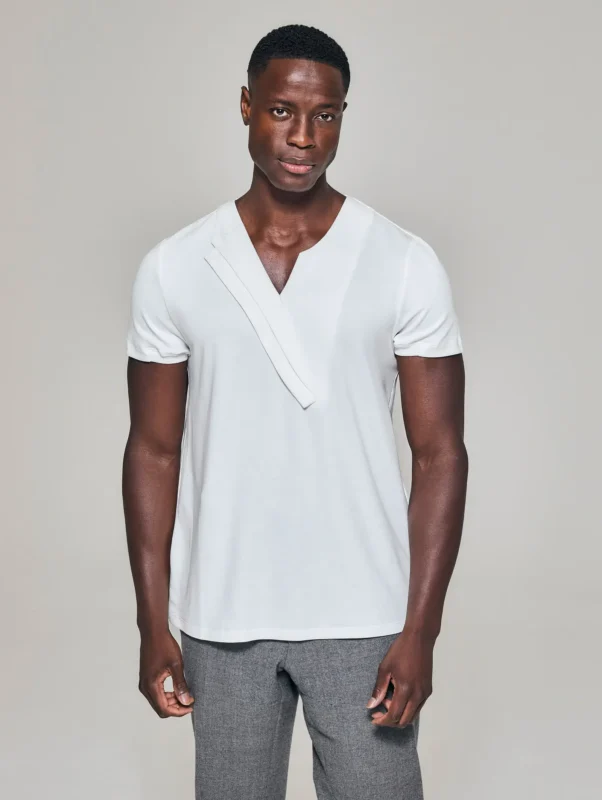
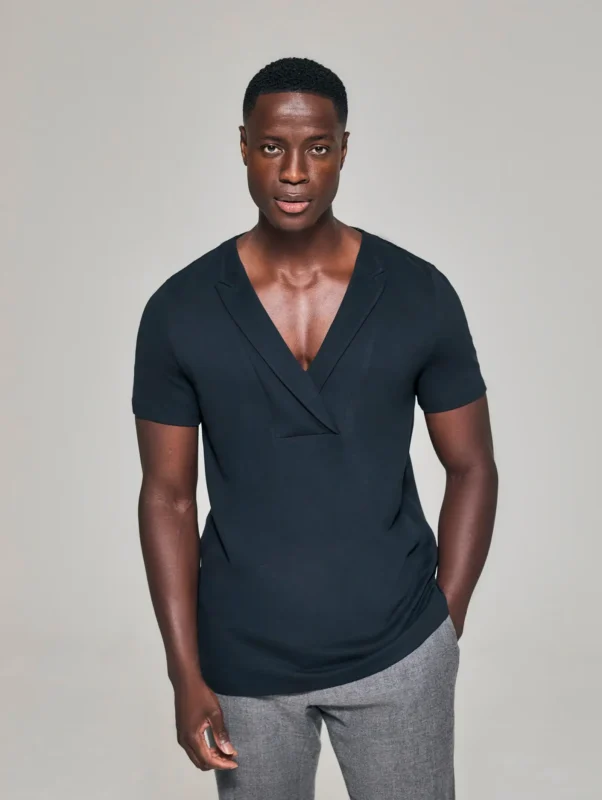
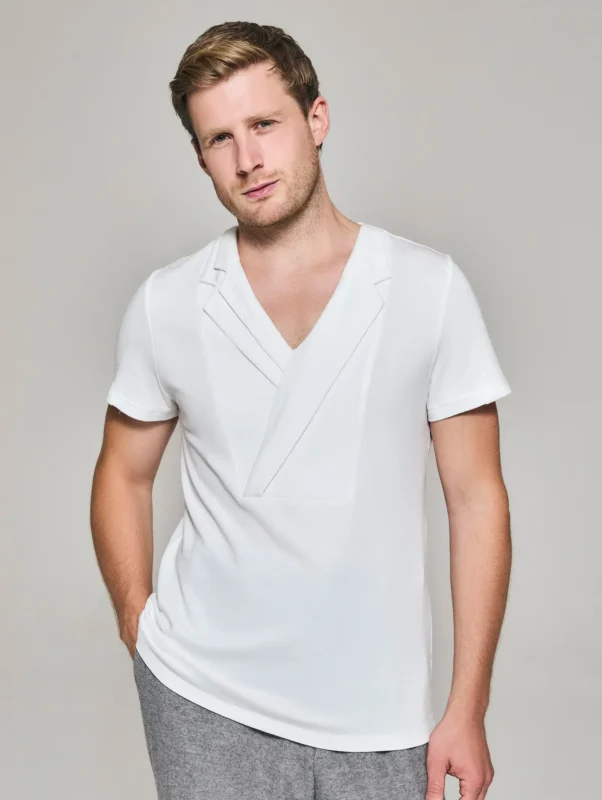
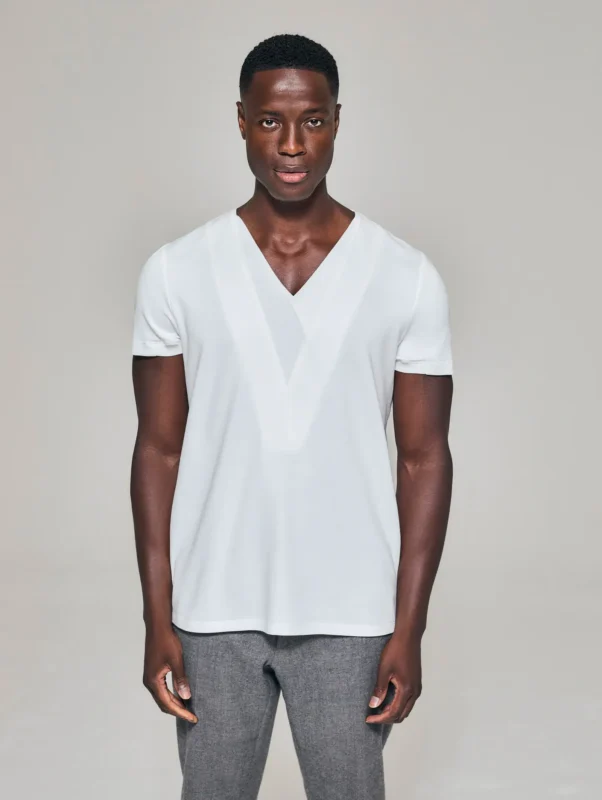
Look at the back of most T-shirts and there isn’t much to describe. That’s partly why the W.Rubens signature back notch lapel catches the eye: a detail rooted in traditional British tailoring, placed on a garment that started out as underwear. Across the collection, the same thinking shows in sharp V-necks, curved rib necklines, bib fronts, layered panels and contrast grey top-stitching.
The white T-shirt made its name when men put on show what had once been hidden. W.Rubens applies a similar instinct to construction, putting detail where a conventional T-shirt often offers none.The lapel T-shirt is the clearest example: the familiar white T-shirt, given the vocabulary of a tailored jacket.
Attention to cut, fabric and finish has become a familiar buying principle, one explored in our guide to quiet luxury as a wardrobe strategy. W.Rubens takes that attention further, combining distinctive design, British craftsmanship and a modern tailoring sensibility to give a familiar garment an unmistakable point of view. White and black are the two W.Rubens signature T-shirts; our comparison of black and white T-shirts looks at where each neutral works best.

Conclusion
The plain white T-shirt has a reputation for being effortless. That’s slightly unfair to the T-shirt.
A good one has to frame the shoulders, hang cleanly, remain opaque, keep its neckline after washing and survive the fact that coffee, tomato sauce and public transport all seem magnetically attracted to white cotton. When it succeeds, none of that work is particularly visible.
Finding one that manages all of it is harder than it sounds. W.Rubens began with exactly that question: throughout his career as a stylist, Founder and Creative Director Michael Shuttleworth was repeatedly asked where to find the best white T-shirt, and the lack of a convincing answer became the starting point for the brand.
So take the white T-shirt you already own to a window. Check the shoulder and neckline, then hold the cloth to the light. If it passes, keep it in rotation. If it fails, you’ll know what the next one needs to get right.
The next time a man in a white T-shirt looks unusually well dressed, study the details before crediting the colour. White didn’t create the effect. It made the good decisions impossible to miss.
Explore the W.Rubens collection and check the size guide before ordering

Frequently Asked Questions
Q. Why do men look so good in white T-shirts?
White reflects more light towards the face than darker colours and removes visual distraction from pattern or strong colour. This makes fit, posture and fabric more noticeable, so a well-cut, opaque white T-shirt can look clean and considered.
Q. What makes a white T-shirt look expensive rather than basic?
Fit, opacity and construction count most. A clean shoulder line, a stable neckline, a dense mid-weight fabric that stays opaque and keeps its shape, and neat seam and hem finishing all help. A prominent logo has very little to do with it.
Q. How can I tell if a white T-shirt will be see-through?
Hold a single layer up to a window in daylight. If the outline of your hand is very clear, the T-shirt is more likely to become translucent under bright office lighting or direct sun.
Q. Can a man in a white T-shirt look smart rather than casual?
Yes. A well-cut white T-shirt beneath an unstructured jacket or overshirt and paired with tailored trousers can work comfortably in smart-casual settings. Formal dress codes may still call for a shirt.
Q. How do I stop a white T-shirt turning grey or yellow?
Wash cool, keep whites separate from garments likely to shed dye, skip fabric softener and avoid high heat when drying. Some optically brightened whites can also lose part of their original brightness through repeated washing.
Q. Is a white lapel T-shirt smarter than a plain white T-shirt?
Usually, yes. A lapel borrows directly from tailoring, framing the neck and collarbone much as a jacket collar does, so a white lapel T-shirt looks more considered while keeping the ease of jersey.