Does Supima Cotton Shrink?


Does Supima cotton shrink? Yes. Most of it happens in the first wash, when water loosens the tension left in the fabric from knitting and finishing. Heat and tumbling add to it.
A white T-shirt is the piece you wear most and think about least, until it comes out of the tumble dryer a couple of centimetres shorter. If you’ve paid more for one made from Supima cotton, you’ll want to know whether that can be avoided. Mostly, it can. Some of that first-wash shrinkage was built in before the T-shirt reached the shop, but what happens after it is down to you, and above all to what you do with the dryer.
Why Cotton Shrinks at All
Most people notice it after the first wash, when a hem that used to cover the waistband of their trousers no longer quite does. What has changed is the knit. A T-shirt is made of thousands of small interlocking loops, and every stage at the mill, from the knitting machine to the dye bath to finishing, stretches those loops a little and keeps them that way. The finished cloth looks relaxed.
Water lets it go. The cotton fibres absorb it and swell, the loops loosen, and the fabric pulls back in. Heat and tumbling push it further, and whatever size the shirt has reached when it dries is the size it keeps.
Two different things are happening
Relaxation shrinkage is that first release of tension from knitting and finishing. It happens the first time the fabric gets wet, accounts for most of the change you’ll ever see, and is largely over after one wash. How much of it there is depends on how the fabric was prepared at the mill.
Progressive shrinkage is the smaller movement that follows, a little more with each hot wash and each spell in the dryer. It builds up over months, and it’s the part your care routine can stop.
So if your T-shirt comes out of its first wash slightly smaller, that’s expected. If it keeps getting smaller after that, look at how it’s being washed and dried.
Cotton Incorporated’stechnical guidance on shrinkage performanceexplains how the industry measures dimensional stability. The standard test, AATCC 135, washes and dries fabric through repeated cycles and records the change in length and width. Because the test is run on the finished fabric, its result tells you more about how a T-shirt will fit next year than the name of the cotton on its label.
Did You Know?
A T-shirt can shrink in length and width at the same time, and usually not by the same amount. One T-shirt keeps its width and loses length, so it still fits across the chest but lifts at the hem when you reach up. Another does the opposite.
The Thing Most Guides Get Wrong
Most explanations you’ll find online credit Supima’s longer fibres with keeping a T-shirt its size. Those fibres do plenty for a T-shirt, but that isn’t one of them.
Fibre length affects strength, not size
Supima is an extra-long staple cotton grown in the United States. Its fibres are up to 35 per cent longer than standard cotton and,according to the Supima organisation, spin into stronger yarns. You see the difference over time: a smoother surface, less pilling, and a good Supima T-shirt that still looks like itself after years of wear. The fuller comparison is in our guide toSupima cotton versus standard cotton.
Shrinkage is a different matter. Long fibres absorb water and relax in heat just as short ones do, so the name on the label tells you how well the cotton will wear, and very little about whether the T-shirt will still fit you next month.
Finishing is the variable that actually controls it
Picture two white T-shirts, both labelled Supima, bought in the same week. One comes out of its first wash looking exactly as it went in. The other has started riding up whenever you reach for something on a high shelf.
The cotton is the same, so the difference comes from what happened to the fabric before either T-shirt was cut: its stitch density, how much tension it was kept under through dyeing, and whether it was relaxed or compacted before it reached the cutting table. Fabric that was allowed to relax at the mill has done most of its shrinking before it reaches you. Otherwise, your first wash does the job.
Pro Tip:
Shrinkage figures online disagree because each one describes a different fabric. So if a brand quotes a figure, ask what it was measured on. A result from the finished fabric under a named wash test is information about the T-shirt you’re buying, which a general percentage for Supima cotton can’t give you.

Where W.Rubens Sits in This
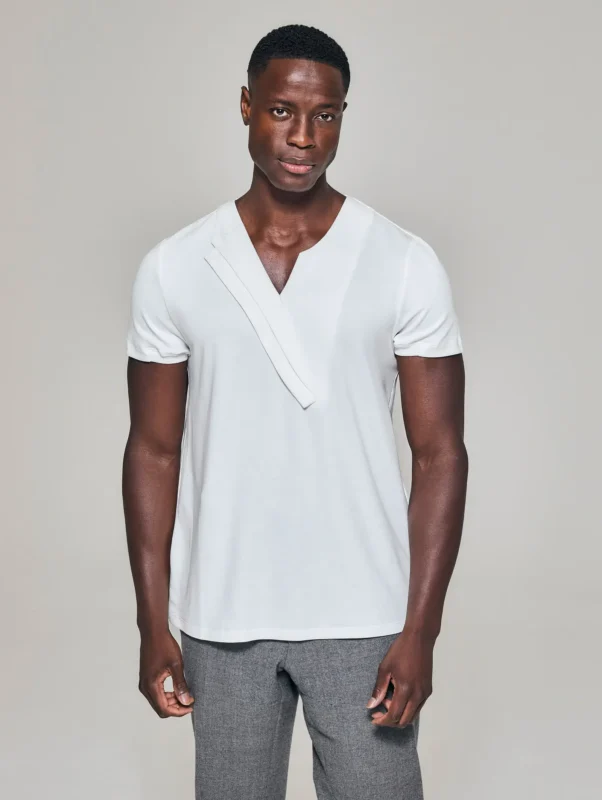
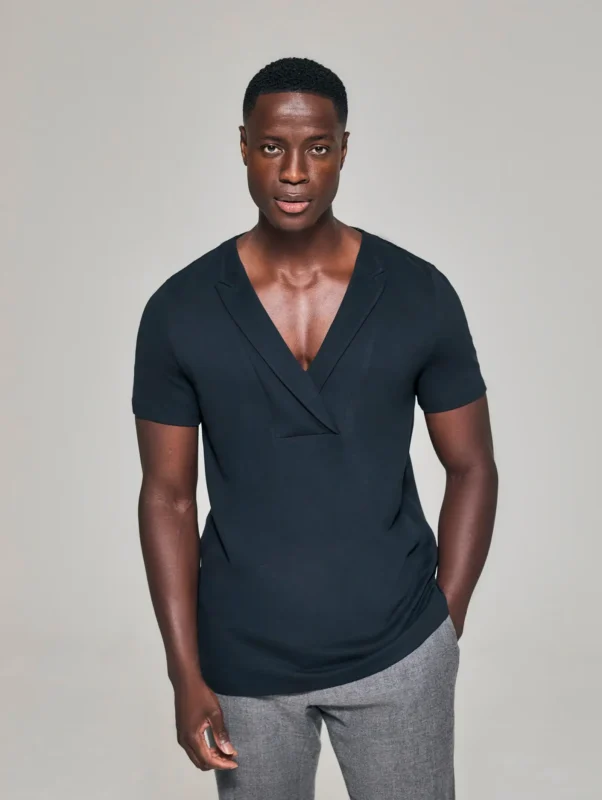
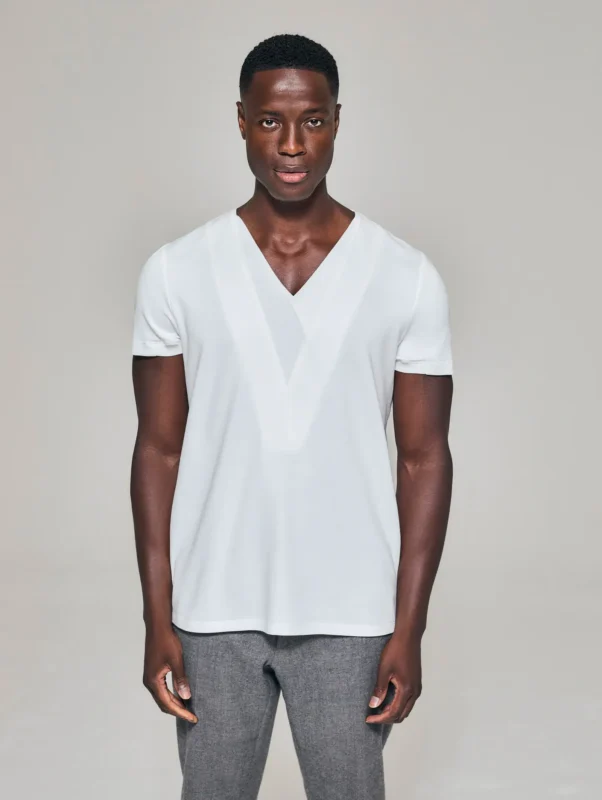
Shrinkage shows most on a close cut. Lose a centimetre from a boxy T-shirt and nobody notices, you included. Lose it from a fitted one and the shoulder seams creep in, the hem rises and a T-shirt that follows your shape starts clinging to it. It’s a problem Founder and Creative Director Michael Shuttleworth saw repeatedly as a stylist, when clients asked where to find a white T-shirt that would keep its fit.
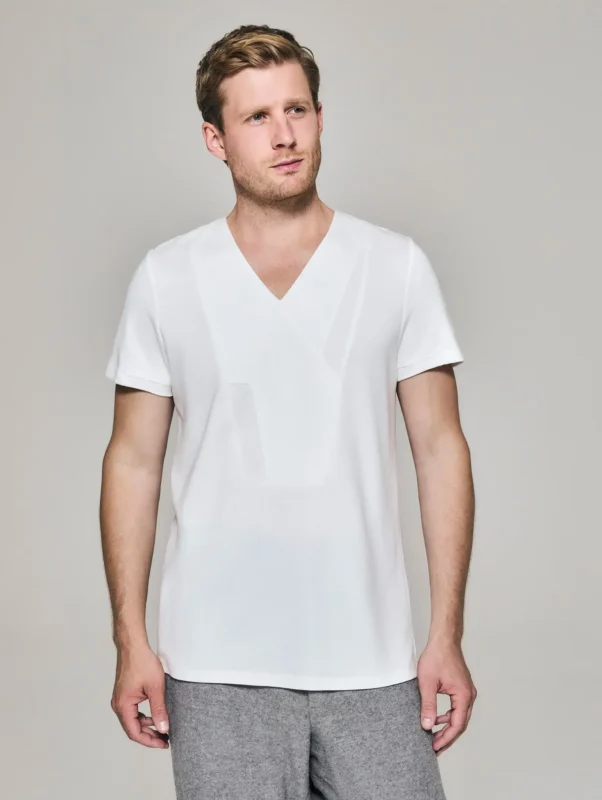
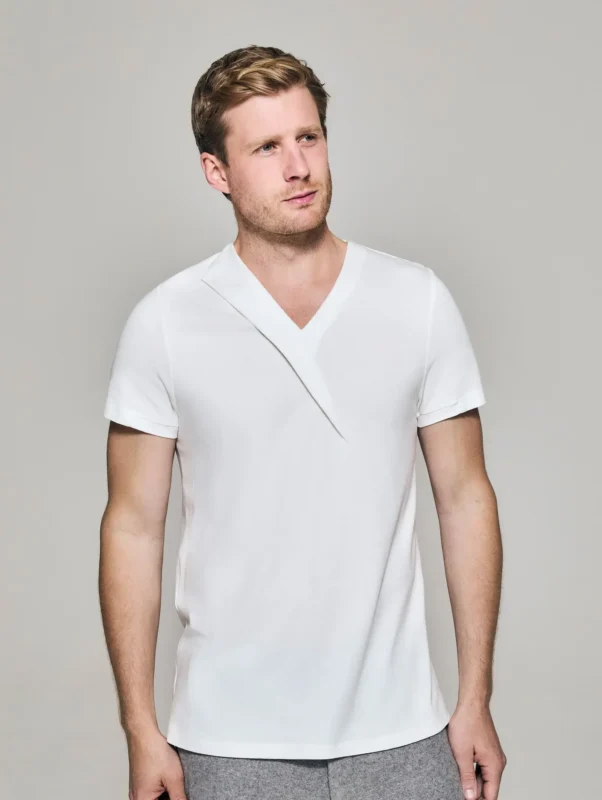
W.Rubens, a London menswear design house, cuts its T-shirts from a proprietary slim-fit block, tailored and fitted through the body. When the cut is that close, what happened to the fabric before it was cut becomes part of the fit. The established W.Rubens fabric has used Supima cotton from California, spun, knitted and dyed in Busto Arsizio, north of Milan, over roughly eight weeks. From there it travels to the factory in North London, where it rests for twenty-four hours before the artisans cut, steam, stitch and press it.
Once a fitted T-shirt is the right size, the next question is how it moves with you which we also cover in our answer to the question:does Supima cotton stretch?
How to Wash Supima So It Keeps Its Size
Most shrinkage happens on autopilot: a white T-shirt goes into a warm wash with everything else, then straight into the dryer. Breaking that habit takes five small changes, in order of impact:
- Turn the garment inside out. It spares the outer face, and any collar or lapel detail, from the rest of the load.
- Wash cold, at or below 30°C. Heat is the biggest factor you control.
- Use the gentle or delicate cycle. Less agitation means less movement in a fabric that water has already loosened.
- Do not overload the drum. Packed garments rub together, and the friction wears the knit out of shape.
- Use a mild detergent and skip the bleach. Harsh chemicals weaken cotton fibres, and weak fibres give way sooner.
Drying Is Where Most of the Damage Happens
The washing machine takes the blame, but usually the wash only loosened the fabric. The dryer finished it off, tumbling it hot until it dried in whatever shape the heat left. In effect, it’s an unwanted tailor, taking garments in without a proper fitting.
Air dry flat wherever possible
Lay the T-shirt on a clean towel and, while it’s still damp, put it back into shape with your hands: square the shoulders, straighten the hem, lay the sleeves flatand, on a lapel T-shirt, smooth the lapel so it dries in line. It takes two minutes and does more for the fit than any detergent.
If you must tumble dry
Use the lowest heat, take the T-shirt out while it’s still slightly damp, and let it finish drying flat. One hot cycle can undo months of careful washing, which is a poor trade for saving an hour. A T-shirt left to cool in a hot drum also comes out creased, which raises another question: does Supima cotton wrinkle?
| Factor | Effect on size | What to do |
| Hot water | High risk, often irreversible | Wash at 30°C or below |
| High-heat tumble drying | Highest risk of all | Air dry flat, or lowest heat only |
| Machine agitation | Moderate, cumulative | Gentle cycle, half-full drum |
| Bleach and harsh detergent | Indirect, weakens fibres | Mild detergent only |
| Air drying flat | Protective | Reshape while damp |

If It Has Already Shrunk
If you’re reading this with a smaller T-shirt in your hand, there’s some hope, but don’t count on a miracle. Soak it in cool water with a small amount of hair conditioner or baby shampoo for around fifteen minutes. Press the water out without wringing, then ease the fabric back towards its old size, a little at a time and evenly across the whole T-shirt. Pull hard in one spot and you’ll swap a small T-shirt for a misshapen one. Dry it flat.
If it shrank in a hot wash or a high-heat dryer cycle, expect less. Heat-set shrinkage is close to permanent, so you may win back a little length, but probably not the fit you bought it for.
Conclusion
Supima cotton does shrink, mostly in the first wash, and how much depends on how the fabric was made. So when you’re buying a T-shirt, ask how the fabric was prepared as well as what cotton it’s made from.
Looking after the one you have is simpler. If it’s in tonight’s dryer pile, move it to the rack. Explore the W.Rubens T-shirt collection, and follow the care guidance on each garment to keep the fit you chose.
Frequently Asked Questions
Q. Does Supima cotton shrink more than regular cotton?
Not as a rule. How much any cotton T-shirt shrinks depends mainly on how its fabric was knitted and finished, and on how it is washed and dried. The fibre name alone does not decide it.
Q. How much will Supima cotton shrink in the first wash?
Most of the shrinkage happens in the first wash, as the fabric releases tension left from knitting and finishing. The exact amount depends on the fabric, so no single percentage applies to every Supima garment. Check the maker’s guidance rather than a general figure found online.
Q. Can I put Supima cotton in the dryer?
You can, but high heat is the main cause of avoidable shrinkage. Use the lowest heat setting, remove the garment while it is still slightly damp and finish drying it flat.
Q. Does pre-shrunk Supima cotton still shrink?
Only a little. Pre-shrunk fabric has already released most of its relaxation shrinkage, so further change should be small. Hot water and high-heat drying can still cause some progressive shrinkage over time.
Q. Can you reverse shrinkage in Supima cotton?
Partially. Soaking it in cool water with a little hair conditioner or baby shampoo and easing it back into shape while damp can recover some size. Shrinkage set by high heat is effectively permanent.