Shirt vs T-Shirt: What’s the Difference?

The difference between a shirt and a T-shirt begins in the fabric. A shirt is cut from woven cloth and built with a collar, placket and cuffs. A T-shirt is cut from a knitted jersey and pulled over the head. Woven cloth holds a line. Knitted cloth follows the body.
That distinction once came with a strict pecking order: shirts for serious rooms, T-shirts for almost everything else. It’s less rigid now. A beautifully cut T-shirt can look more intentional than a weary shirt with a collar that gave up two washes ago.
The Difference Between a Shirt and a T-Shirt, Explained
The Classic Dress Shirt
Take both off the hanger and the contrast is obvious. Poplin, oxford, twill and linen are woven, which gives a shirt its familiar crispness. Jersey is knitted, with more give and a softer drape.
That difference explains how each garment moves, creases and eventually shows its age.
| Feature | Shirt | T-shirt |
| Fabric | Woven poplin, oxford, twill or linen | Knitted cotton jersey |
| Structure | Collar, placket, cuffs, interlining | Neckband, side seams, hem |
| Reads as | Formal to business-casual | Smart-casual to relaxed |
| Movement | Holds its shape, resists drape | Drapes and stretches with you |
| Upkeep | Pressing, often dry cleaning | Machine wash, hang dry |
| Fails by | Collar collapse, cuff fray | Pilling, neckband stretch |

Did You Know? The T-shirt traces its origins to a standard-issue undergarment for sailors and soldiers. It took better-quality cloth, and a shift in what counted as decent, before it became respectable outerwear. Flimsy jersey and a tired neckband can still betray the T-shirt’s origins as underwear.
When a Shirt Is the Right Call
Written dress codes have the virtue of ending the debate before it begins.
Rooms with a written dress code
A business-formal invitation or a conservative ceremony leaves little room for improvisation, and that’s a courtesy in itself. The placket gives the torso a clean vertical, the collar frames the neck, and the cuffs finish the sleeve properly.
Anything worn under structured tailoring
Put a crisp shirt beneath a structured jacket and the pieces cooperate. The collar fills the space inside the jacket collar, the placket gives the eye a line to follow and the cuffs emerge neatly at the wrist.
A T-shirt can look excellent beneath softer tailoring. Under a rigid, canvassed jacket, the combination is harder to finesse. The jacket is speaking one language and the T-shirt another.
Pro Tip: Before buying a shirt, check three things: collar height against the neck, where the shoulder seam falls, and how the cuff behaves around a watch. A tailor can adjust sleeve length and body taper without much trouble. Collar height, shoulder position and cuff circumference are far harder to correct.
When a T-Shirt Is the Right Call
The T-shirt does its best work on days that refuse to stay in one place.
Smart-casual and creative workplaces
By nine on Monday morning, a design studio and a traditional boardroom are observing different rituals. In technology, media, design and many smart-casual offices, a well-cut T-shirt with tailored trousers no longer looks like someone forgot to dress for work.
A warped neckline or collapsing shoulder will make a T-shirt look tired before the dress code even becomes the issue. Our guide towearing a T-shirt to worklooks more closely at where the line falls.
Travel, heat and long days
Six hours into a flight, a poplin shirt will remember the seatbelt, the armrest and every ill-advised attempt to sleep against the window. By baggage reclaim, the sleeves may have acquired their own topography.
On the other hand, jersey bends with the body and recovers more readily after hours in a seat, useful when a day begins at an airport, continues across town and ends with no chance to change. A few creases are forgivable; looking defeated is not.

The Grey Zone Where Most People Get It Wrong
Thursday, 7.30pm, at a restaurant where the tables are close enough to notice the person opposite. One diner has chosen a shirt because dinner felt like a shirt occasion. After a full day, the collar has softened and one cuff turns outwards. Across from him is a T-shirt with a clean shoulder, firm neckline and enough substance in the jersey to keep its composure.
The shirt is technically more formal. Nobody looking at the pair would call it the better-dressed garment.
A cheap shirt loses to a good T-shirt
Buttons won’t rescue poor fabric. A thin, boxy shirt with a collapsing collar can look shabbier than a T-shirt cut properly through the shoulder and chest.
Dress codes tell us what kind of garment belongs in the room, but they don’t absolve it from being any good.
When tailoring logic is applied to jersey
Tailoring has always dealt in proportion, line and small adjustments that alter the whole impression. Apply that eye to jersey and a supposedly simple garment acquires more character.
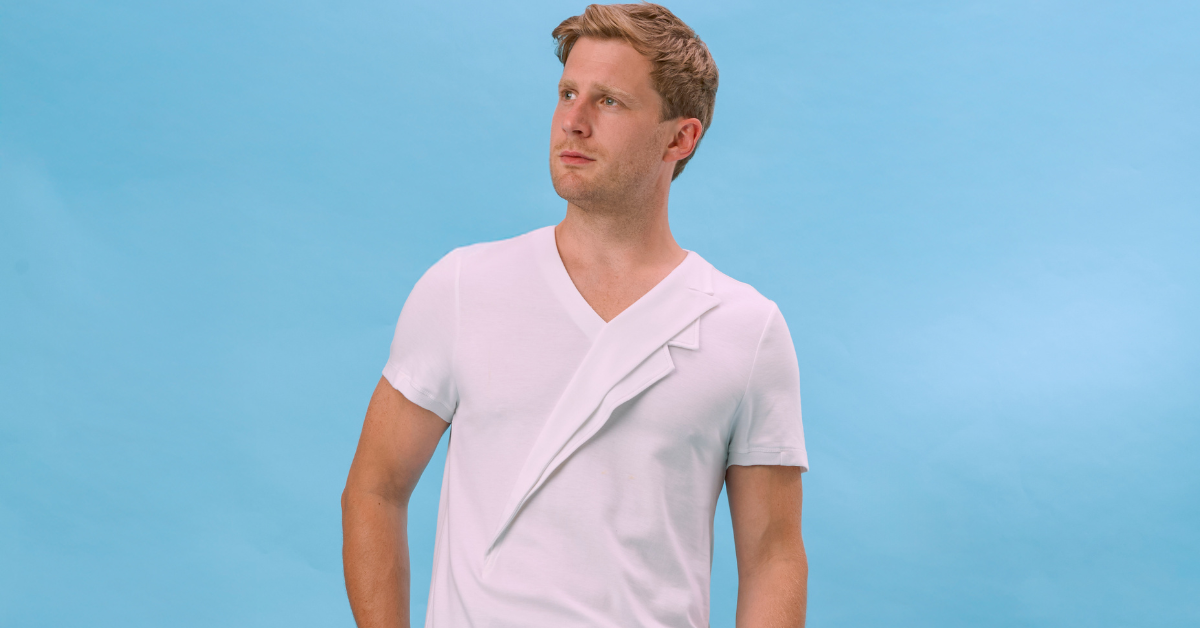
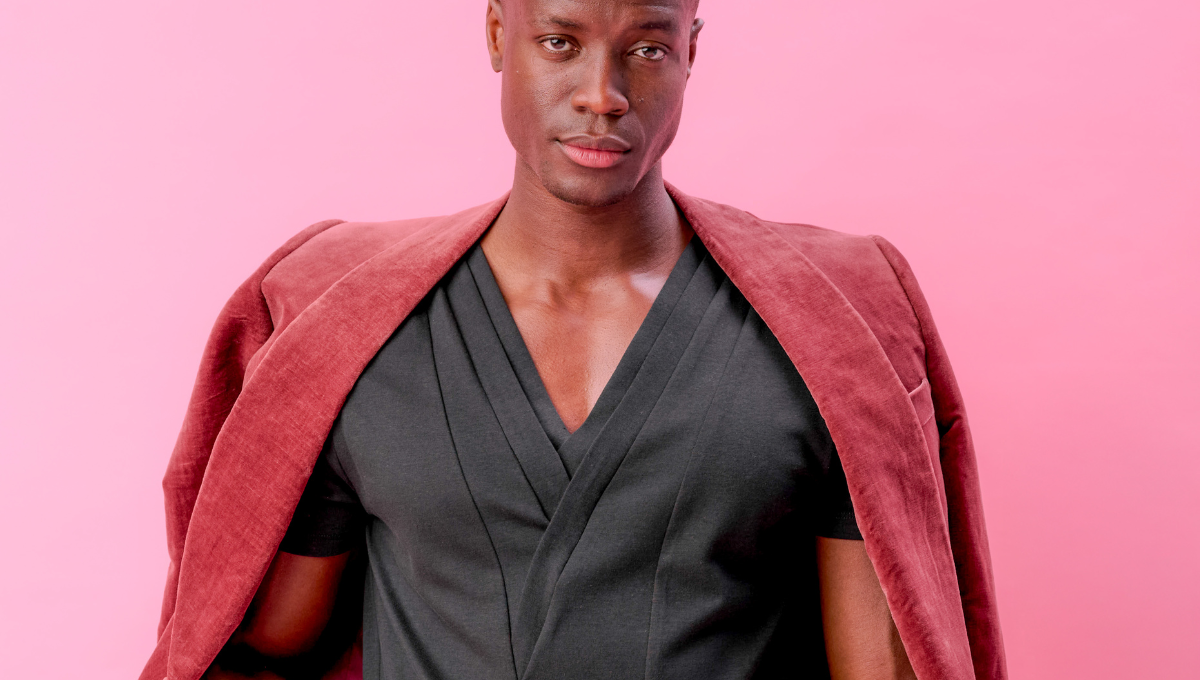
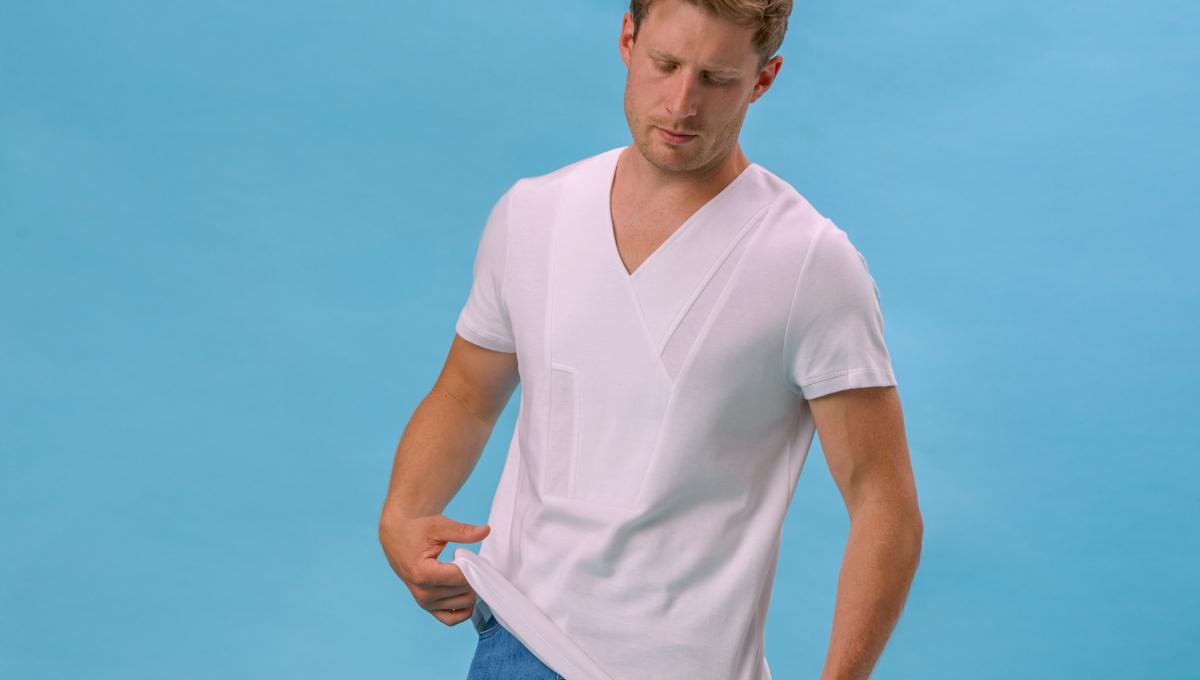
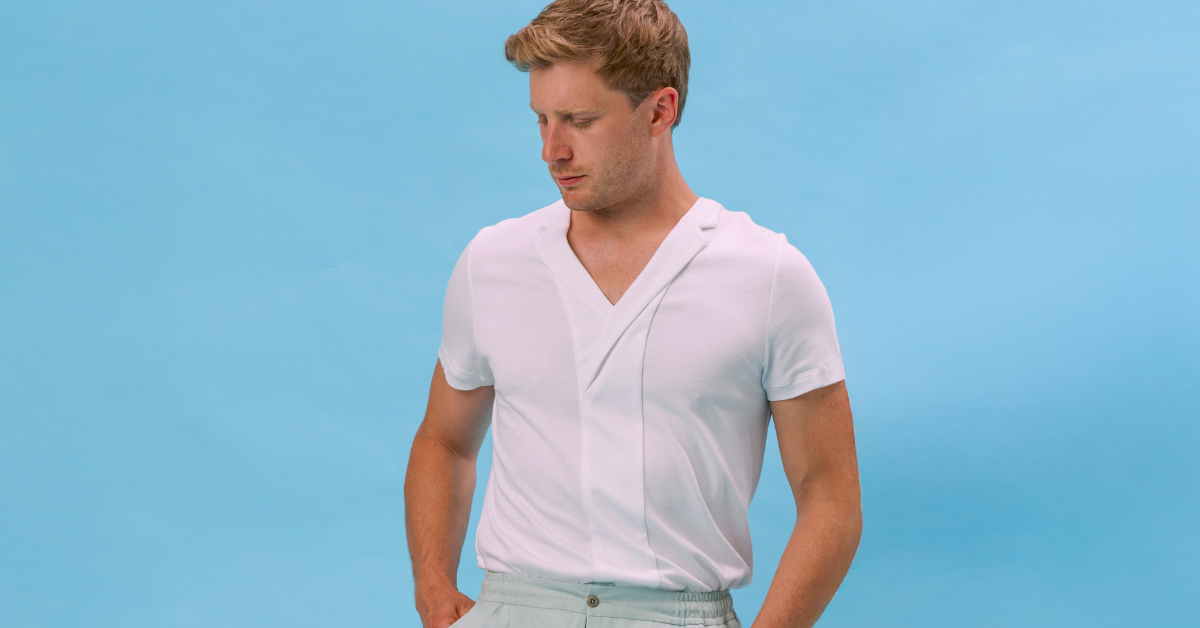
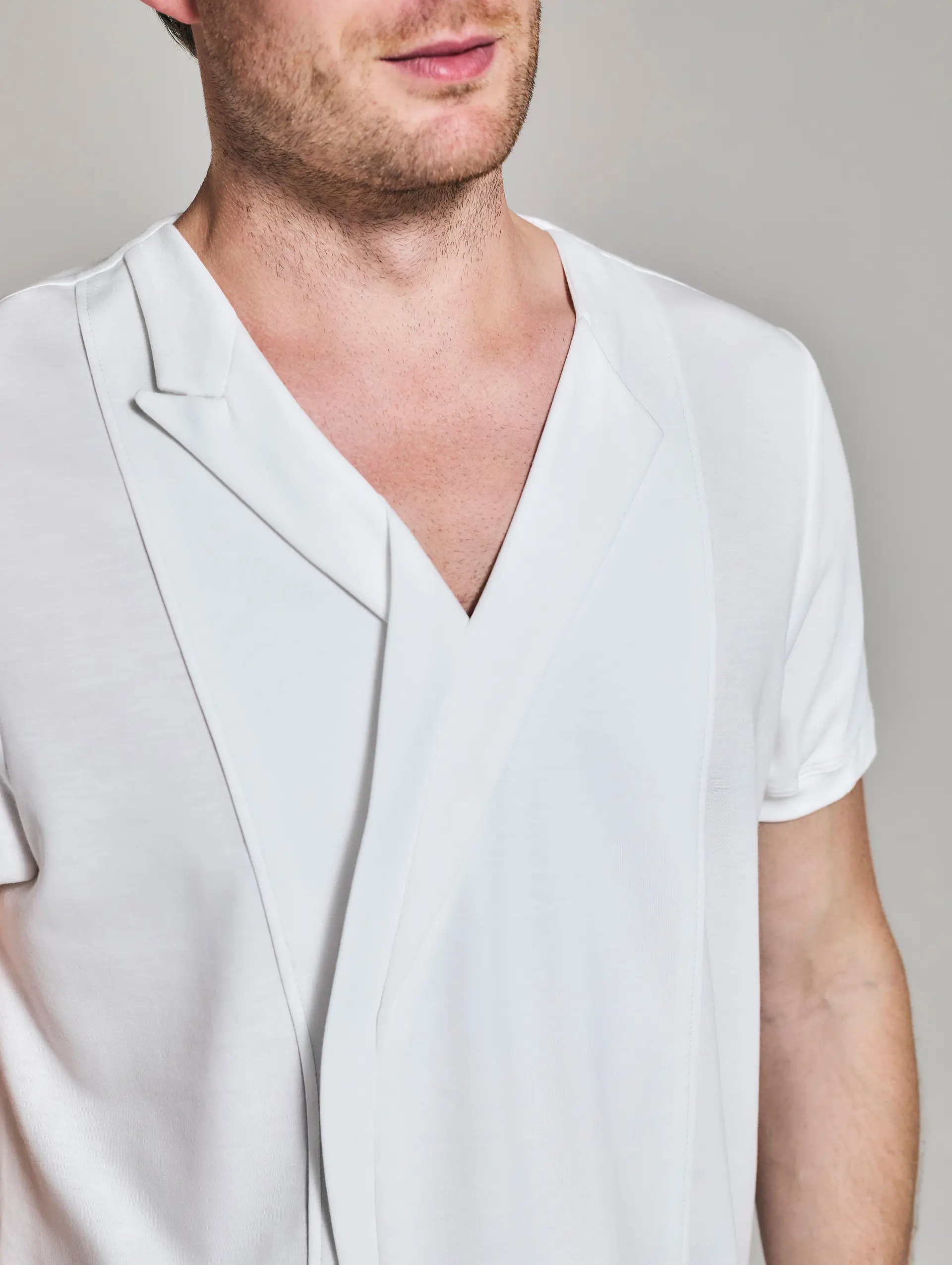
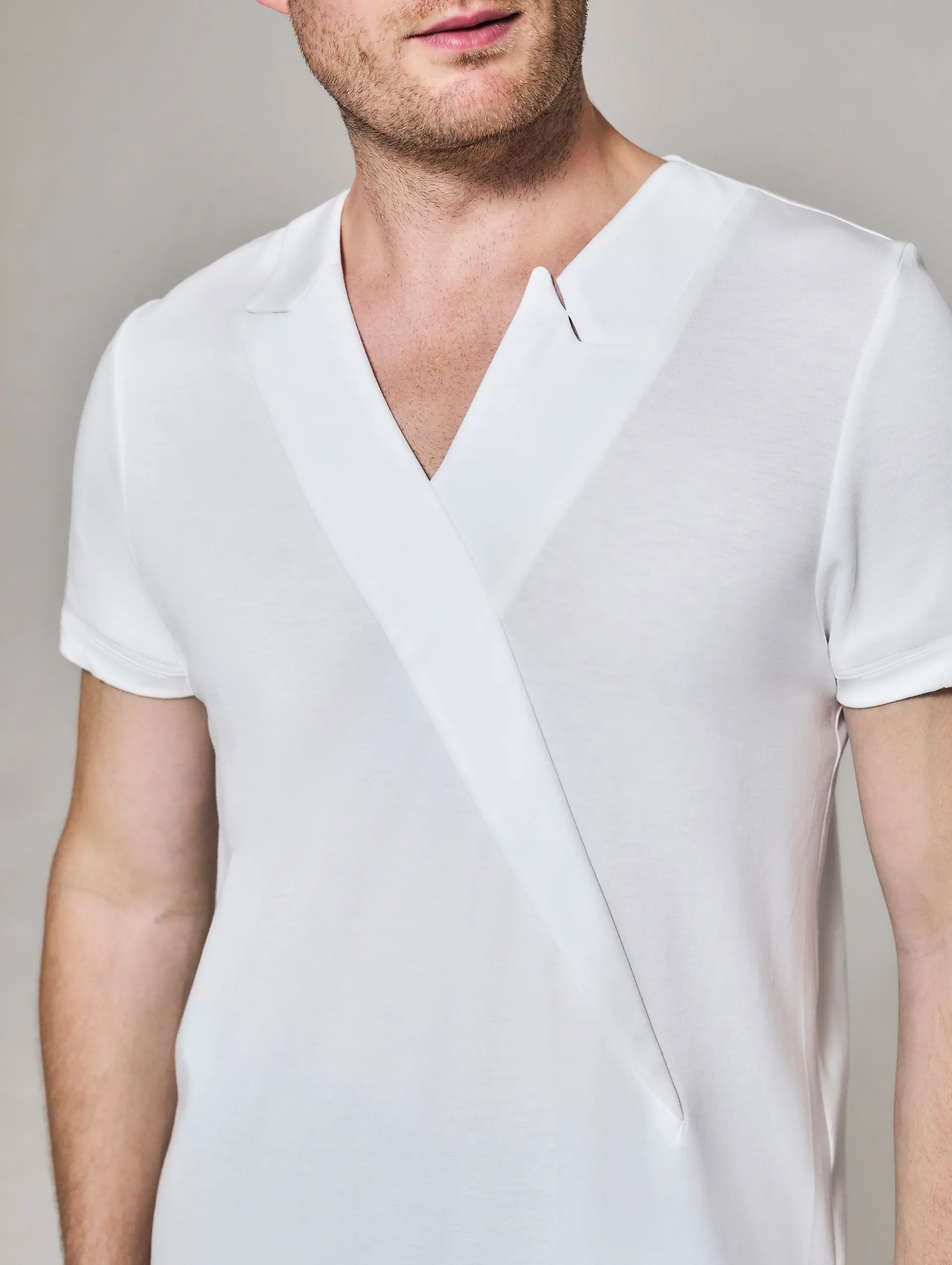
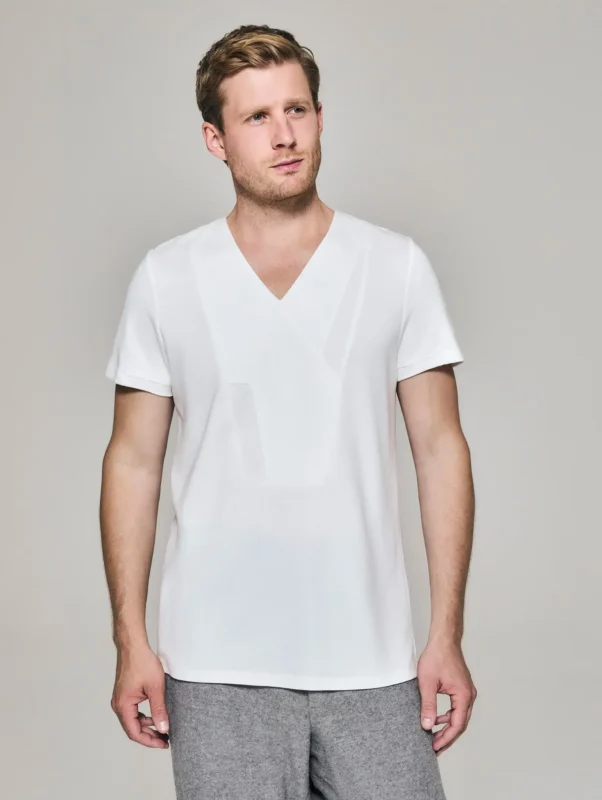
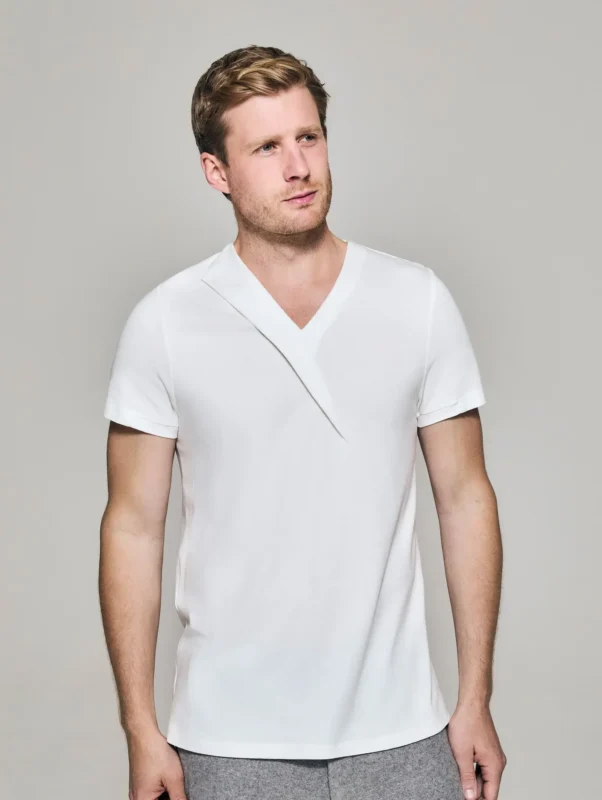
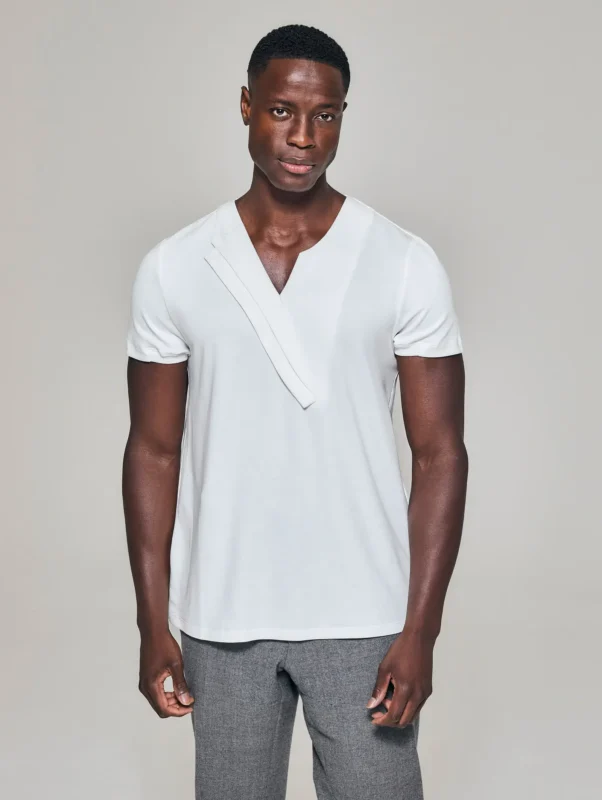
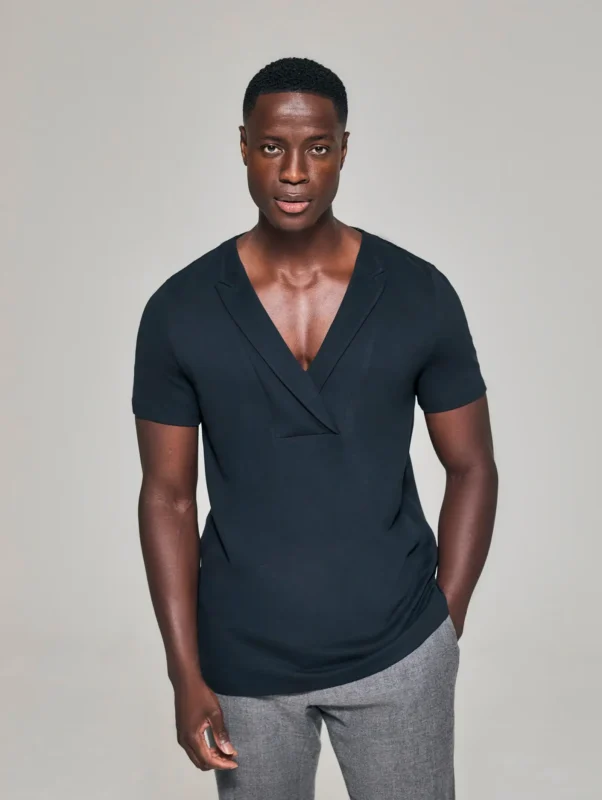
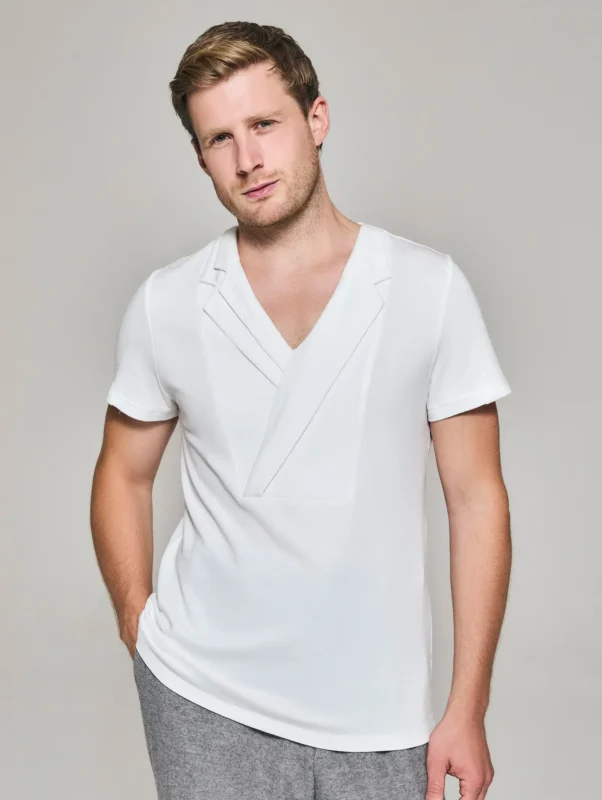
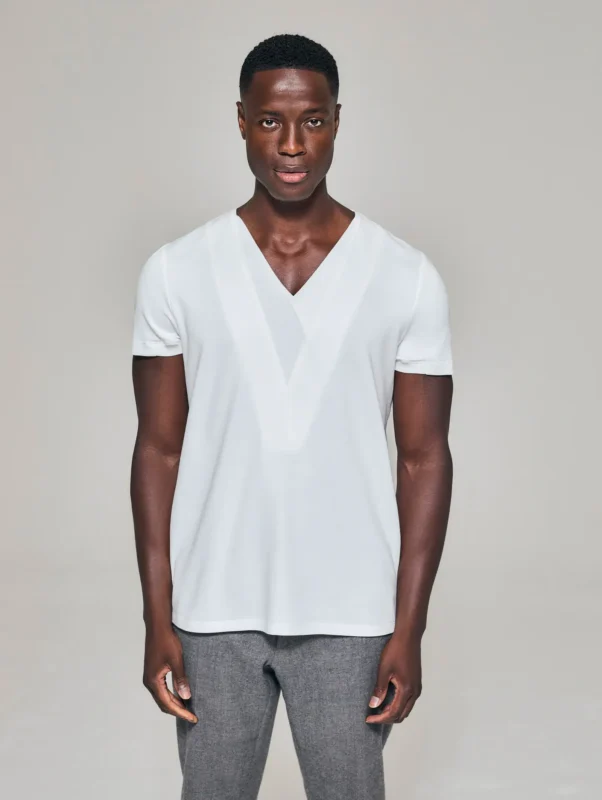
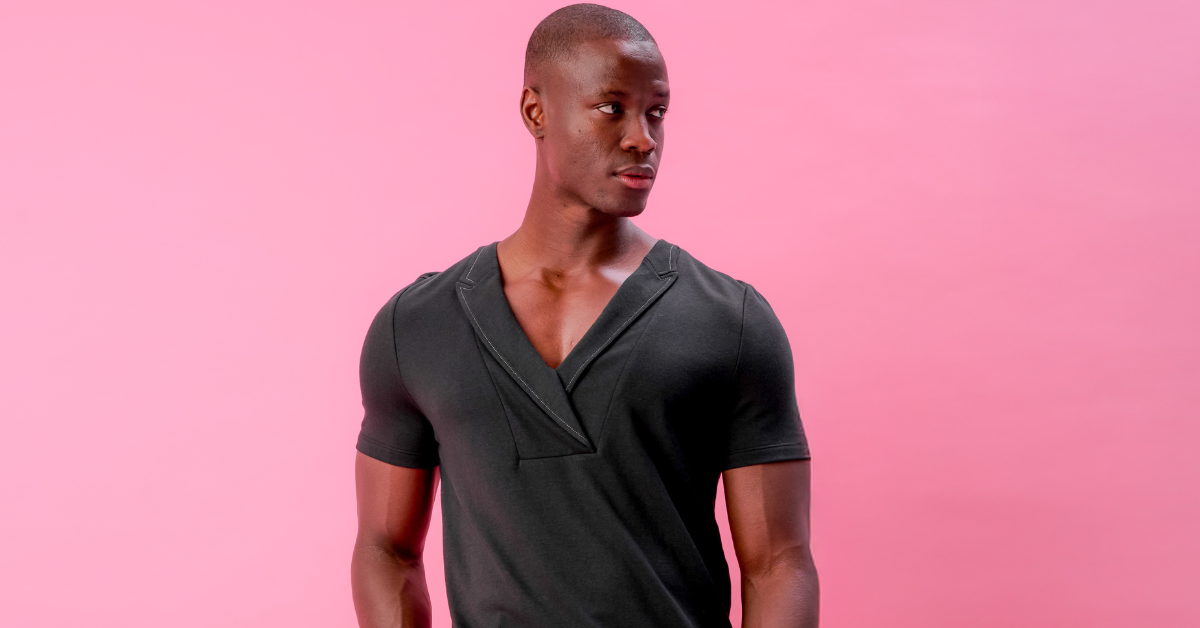
W.Rubens, a London menswear design house, approaches the T-shirt through the eye of tailoring. One recurring design code is its signature back notch lapel, a detail rooted in traditional British tailoring, while bib fronts introduce another piece of tailored vocabulary at the front. These details change how a familiar garment reads at close quarters. The result is the lapel T-shirt: a garment with the ease of jersey and the vocabulary of a tailored jacket, sitting naturally in the space between shirt and T-shirt.
Attention to cut, fabric and finish has become a familiar buying principle, one explored in our guide toquiet luxuryas a wardrobe strategy. W.Rubens takes that attention further, combining distinctive design, British craftsmanship and a modern tailoring sensibility to give a familiar garment an unmistakable point of view.
How Many of Each Do You Actually Need?
Most wardrobes contain clothes bought for an imaginary calendar: the dinner jacket waiting for invitations, the fifth white shirt in a week with one formal meeting, the T-shirt kept because it might become useful again.
A more sensible count begins with a typical month in your actual calendar.
- Count your formal dress code commitments in a typical month.
- Count your smart-casual days in the same month.
- Buy shirts against the first number and T-shirts against the second.
- Keep the core neutral: white, black and navy. Then allow one or two pieces with personality; a considered detail, such as a lapel or a bib front, says more about the wearer than another plain basic.
- Stop at the point where every item is worn at least twice a month.
For many metropolitan professional wardrobes, that may mean four to six shirts and eight to ten premium T-shirts. Creative and technical roles often reverse the balance. If something hasn’t left the rail in a month, it is storage, not wardrobe.
What Separates a Basic T-Shirt From a Considered One
A T-shirt looks simple because much of its construction is easy to miss. Fibre, seams, neckband and hem do their work without drawing attention, right up until one of them fails.
Fibre. Extra-long staple cotton can be spun into smoother, stronger yarn. Supima, an extra-long staple cotton grown in the United States, is twice as strong as regular cotton according to the Supima organisation. That strength contributes to durability, while pilling, shape retention and the life of the neckline also depend on construction. We compare the grades inSupima cotton versus standard cotton.
Construction. Panel count, seam type, stitch density and how the neckline is finished. At W.Rubens, that means French seams at the shoulder and back, contrast grey top-stitching at around 12 stitches per inch, and the back notch lapel, which alone takes more than half an hour to sew.
Provenance. Traceability is the point. W.Rubens built its T-shirts on an established route: raw cotton grown in California, spun, knitted and dyed in Busto Arsizio, Italy, with every garment handcrafted in North London. Each stage can be named.
WRAP research found thatextending a garment’s active life by nine monthscan reduce its carbon, water and waste footprint by around 20 per cent, while a longer active life also lowers cost per wear. The wider case appears in seven reasons to own a great white T-shirt.

Conclusion
The shirt has lost none of its authority; the T-shirt has simply travelled further than its casual origins.
A shirt still belongs in formal rooms and beneath structured tailoring. A well-cut T-shirt brings a different assurance to smart-casual work, travel and the broad territory between ceremony and complete ease.
Look at the cloth, the cut, the condition and the room, then wear the better answer. In the end, the pieces that work are the ones that get worn.
Frequently Asked Questions
Q. What is the main difference between a shirt and a T-shirt?
The main difference is fabric construction. Shirts use woven cloth and usually include a collar, buttons and cuffs, which gives them more structure. T-shirts use knitted jersey with a neckband and no front fastening, so they move more closely with the body and usually read as more relaxed.
Q. Can I wear a T-shirt instead of a shirt to work?
In smart-casual, creative and many technology workplaces, yes, provided the T-shirt is well made, correctly fitted and appropriate to the setting. Traditional corporate environments and formal dress codes are more likely to call for a shirt.
Q. How many shirts and T-shirts should I own?
Start with the calendar instead of a fixed wardrobe rule. Four to six shirts and eight to ten premium T-shirts may suit many metropolitan professional wardrobes, while creative or technical roles may call for a different balance.
Q. Are expensive T-shirts actually worth it?
They can be when the price reflects better fibre, construction and traceable manufacturing. Those factors contribute to durability, shape retention and lifespan, all of which affect cost per wear.
Q. Is a polo shirt a shirt or a T-shirt?
A polo is technically a knitted garment, so its construction is closer to a T-shirt. Its collar and button placket borrow from shirting, which is why it works neatly between the two in smart-casual settings.
Q. Is a lapel T-shirt smarter than a regular T-shirt?
Yes. A lapel borrows directly from tailoring, framing the neck much as a shirt collar does, so a lapel T-shirt looks more considered while keeping the comfort of a knitted jersey.